Pagan Influences in Christian Theology

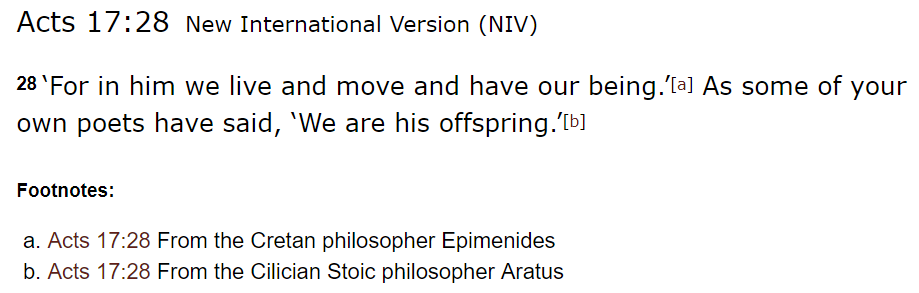
I recently read from a budding South African theologian of Ad Lucem Ministries that the New Testament’s concept of God is not based on Graeco-Roman philosophy. Yet this does not seem to be the case…(see attached photo), Acts 17:28 (NIV):

cc-2018-jw-acts1728

It is quite peculiar that the New Testament uses the term “ειμι” (to exist) for God but never in the present participle form of “ὤν” (being). What’s interesting is that New Testament’s translators continue to replace in their translations “ειμι” for “ὤν” in English, almost as if the allegedly inspired texts in and of themselves use insufficient language…

We see further examples of a dependency on Platonic-Aristotelian metaphysics in Philippians 2:6, where “μορφε” (form) is translated as “nature or essence”, a completely Platonic-Aristotelian pre-Christian concept in philosophy, referring to the “material whole”.

The Trivium Final

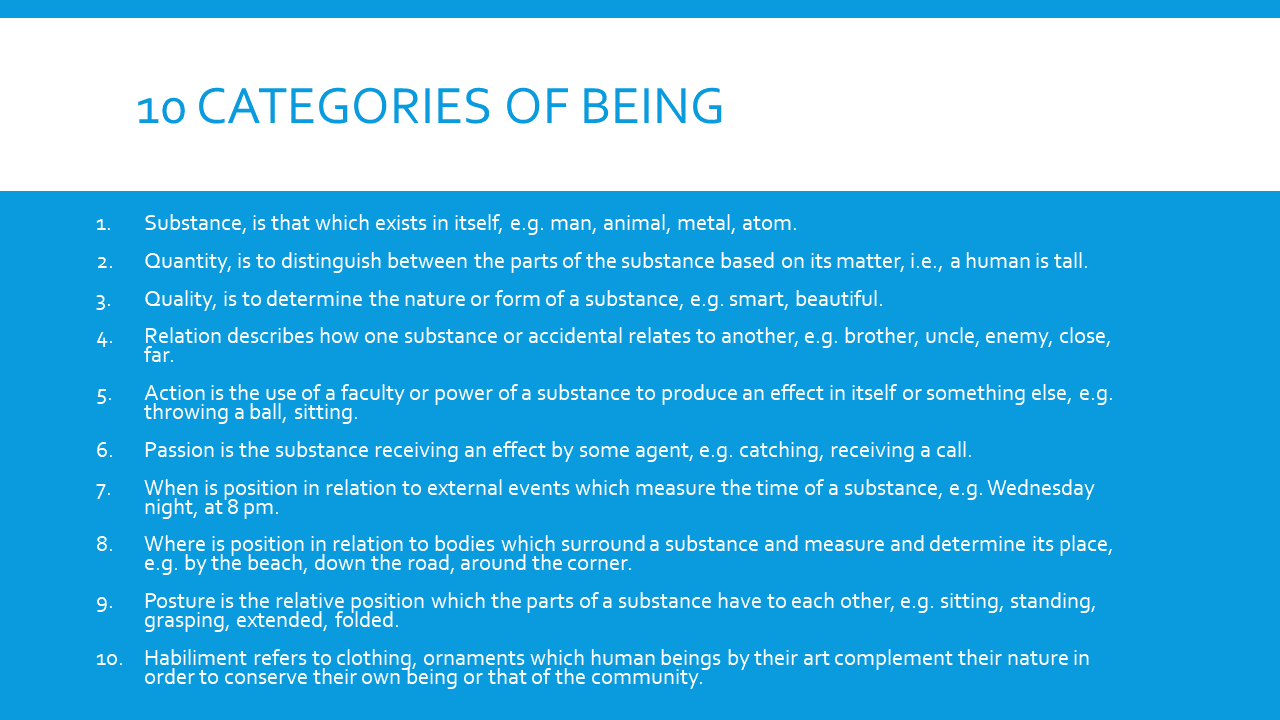
This is why in Christianity, God who is a “ουσια” (substance) can also be immanent, because it fits into the Aristotelian pre-Christian concept of an “accident” (a substance that exists in another substance), i.e. God (a being) in flesh (another substance). This can also be seen in the sense of passion, from the “Praedicamenta”/ 10 Categories of Being, where God (a being) uses a form and thus can experience pain in one sense and not in other because this Being can distinguish between itself (read as quantitatively, therefore “Persons” in the Godhead) and can have various forms (read as qualitatively) hence the hypostatic union.

The Trivium Final

While some Christian apologists deny these dependencies on Platonic-Aristotelian pre-Christian philosophies, by using these terms, they are implying an already understood meaning, which in this case would be the predominant Platonic-Aristotelian metaphysics for their onto-theology of “God”.

It should be noted that this is the reasoning behind Justin Martyr’s statement of:

“And when we say also that the Word, who is the first-birth of God, was produced without sexual union, and that He, Jesus Christ, our Teacher, was crucified and died, and rose again, and ascended into heaven, we propound NOTHING DIFFERENT from WHAT YOU BELIEVE regarding those whom you esteem sons of Jupiter.”

Source: Justin Martyr, The First Apology, Chapter 21.

Some apologists have argued that Justin was using “hyperbole”, this is an ignorant claim, without understanding of basic Graeco-Roman metaphysics.

and Allah knows best.

Response to Dr. James White’s Dividing Line Show on Jan. 9th 2018

Please note – I have quoted Martin Luther in this video and he has many anti-Semitic statements towards the Jewish people. I have only quoted him to provide context for statements made in response to Dr. White. I do not endorse or encourage use of Luther’s hateful views.

See the Presentation that Dr. White is commenting on here.

For more information on the event, see this link.

For the corruption of the OT and NT, according to Islamic beliefs, see this link.

and God knows best.

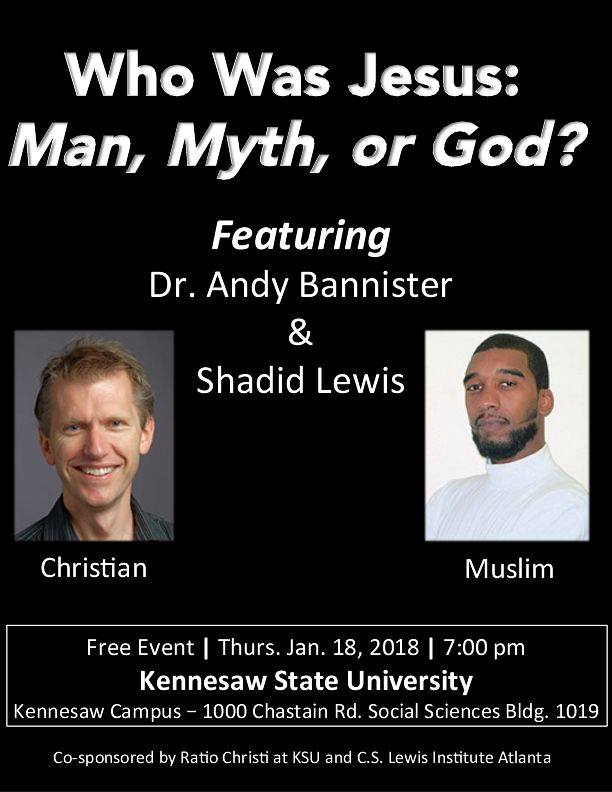
Upcoming Debate: Br. Shadid Lewis and Dr. Andy Bannister


cc-2018-sitenews-shadidbannisterdebate

For further information, please see the Facebook event page as created by Ratio Christi. There is no information as of yet on whether or not there will be a livestream of the debate or the duration till the recording will be made public. As soon as any pertinent details are made aware to us, we’ll update this post and share the relevant information on our social media platforms.

and God knows best.

Early Review of QuranGateway.Org

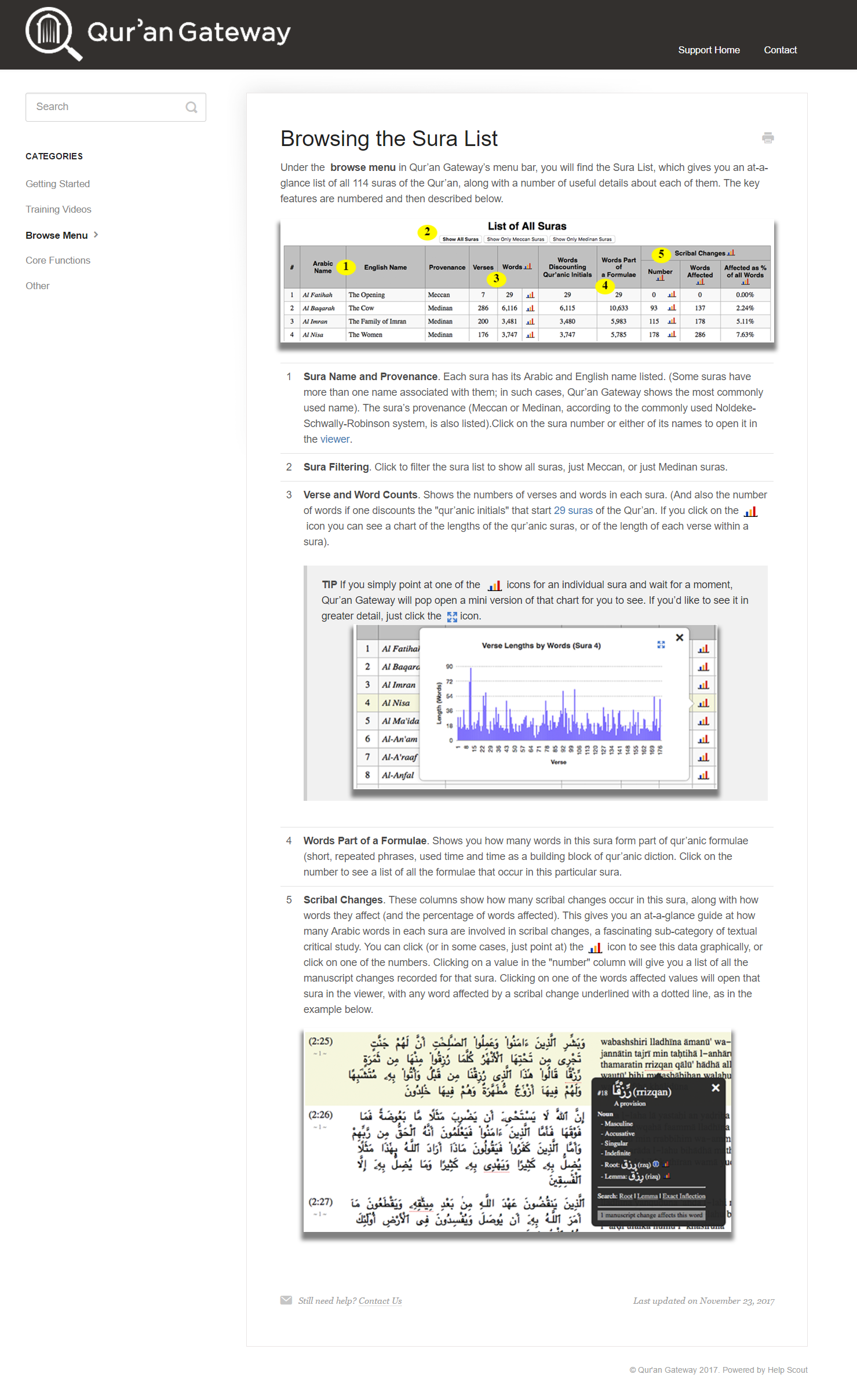
Developed in tandem by Dr. Andy Bannister and Dr. Daniel Brubaker, QuranGateway.Org aims to be an educational and research based resource for the study of manuscripts of the Qur’an. Several months ago I was able to view the website as it developed and have since been following its updates. What makes QuranGateway unique is that it provides a searchable database based on Daniel Brubaker’s PhD thesis about variants in the Qur’anic manuscript tradition. The website is also based on Dr. Bannister’s research from a few years ago on the oral formulations of the Qur’anic narratives that correlate with Biblical narratives.  In the image below, we can take a quick preview of the interface and the information generally provided on the “Browsing Surah List” help page (click to enlarge):


Quran Gateway Browsing Surah List

Based on Dr. Bannister’s analysis of themes in the Qur’an, various charts and infographs have been generated using his primary research data (click to enlarge):

Quran Gateway Intro to ChartsOne of the main features of the website, though the functionality is erratic at times (I am not sure if it is based on incorrect data from Brubaker’s thesis or website database issues), is the ability to view some scribal changes in some early manuscripts of the Qur’an. One will note however, that the reason for such scribal changes and errors is not explicitly explained in pages that list the changes themselves. This is obviously an issue, as one has to ask, why would they list the changes without using the entirety of Brubaker’s data where it is explained that these were largely either scribal mistakes, or due to the orthographic development of the Arabic language? Hidden away on a largely obscure page, we are eventually told that the vast majority of these variants are in and of themselves, irrelevant (click to enlarge):

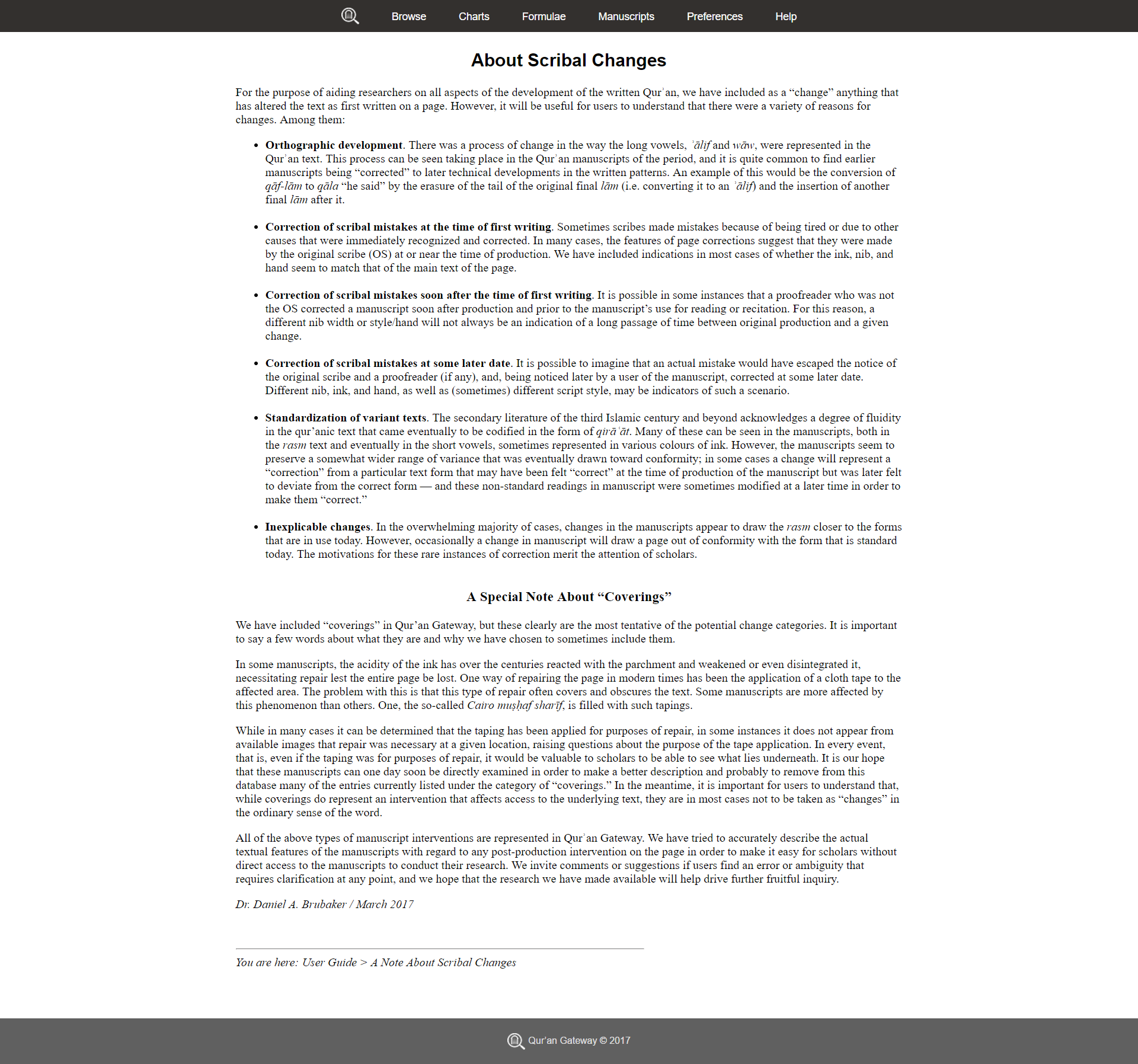
Quran Gateway Scribal Changes

The purpose of the website therefore seems to be confusing. On the one hand, its main emphasis seems to be twofold, themes in the Qur’an based on Dr. Bannister’s research and scribal changes based on Dr. Brubaker’s research, yet when it comes to the latter the data seems to be largely incomplete. Most of Dr. Brubaker’s analysis in his PhD thesis indicates that almost all the scribal changes cannot be found in the Qira’at literature, meaning then that they are unique issues delimited only to single manuscripts themselves, most of which were the use of the Arabic letter alif as it pertains to early Arabic orthography (see pages 29 to 30 here). This information however, seems not to have made its way to the website which is perhaps the most important information that should be included. This is because Dr. Brubaker painstakingly compared the lapsus calami and scribal idiosyncrasies with the vast array of Qira’at literature and documented his results in his thesis, which is one of the two main sources for the dataset on the website. On the one hand we are being told, here is a tool where you can search for these scribal differences, but on the other hand, here’s no contextual information based on a comparative analysis with the rest of the documented information about the varying readings in the Qur’anic tradition that we’ve already done, but we won’t give it to you.

Similarly, while the website aims to be a hub for research, it lacks on its team of scholars any Muslim scholar on the Qur’an. One of the issues here is that if the website is aiming to be a hub for objective academic research and study, and is not meant to be a polemical based Christian apologetics website, then shouldn’t there be a panel of scholars rather than merely two Christian apologists? Dr. Bannister is a Christian apologist, he leads the SOLAS CPC organization in the UK. Dr. Brubaker is also active in Christian apologetics, having used his research to help Joseph Jay Smith in a debate with Dr. Shabir Ally. This issue therefore takes credibility away from the objective based research facade that has been presented. As far as I am aware, no Muslim has been invited to preview the website itself, though the website has been previewed with various Christian groups, most recently in Toronto in December of 2017 (could’ve been November, I can’t seem to recall at this moment).

While I do look forward to using the website, the incomplete data, and lack of diverse scholarship on the panel beyond two Christian apologists presents with it serious credibility issues that need be attended to. One area of possible issue is legally, where some of the facsimiles of early manuscripts have been used without permission from their copyright holders and the rights that were allowed by atleast two organizations are now under reconsideration due to the other facsimiles being used without expressed permission and also due to the Christian apologetics inclination on the website which rather than being viewed as an objective research tool, lends credence to the website being merely a polemical tool for a specific religious group. Despite these issues, I do hope to see further development done to the website. For further information and to see the website in action, here are three videos:

and God knows best.

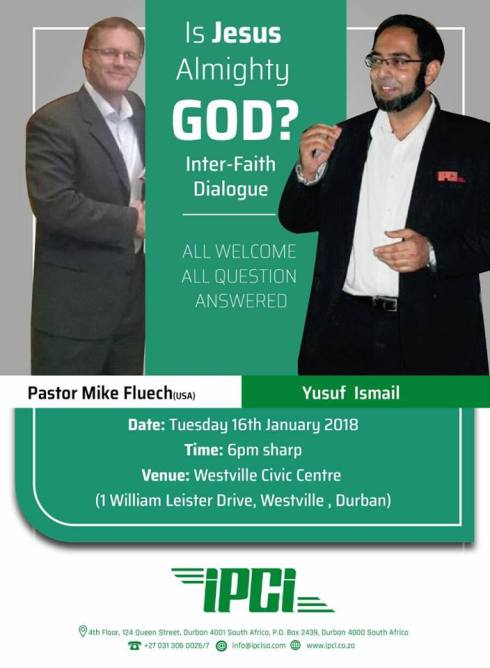
Upcoming Debate: Br. Yusuf Ismail and Pastor Fluech

cc-2018-sitenews-yusufmikefluechdebate

To contact IPCI for further details, please see their Facebook page. We have requested details about a possible livestream and we have received information that there most likely will be one. As soon as we get any further information we’ll share it, and we’ll also post the link to our social media pages.

The time for the debate for those of us outside of South Africa is as follows:

  • London, UK – 4 PM.
  • New York, USA – 11 AM.
  • Port of Spain, Trinidad – 12 Noon.
  • Lahore, Pakistan – 9 PM.

and God knows best.

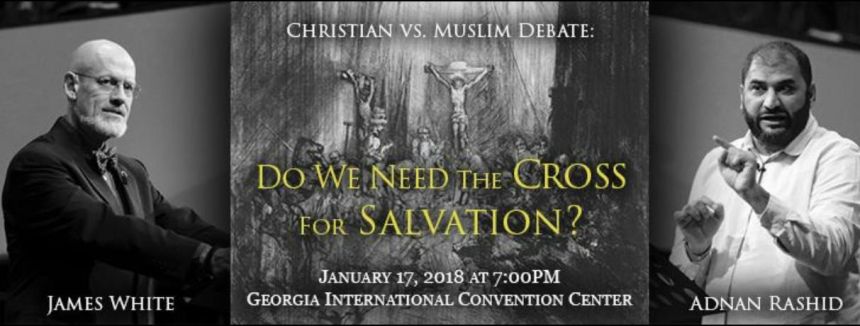
Upcoming Debate: Br. Adnan Rashid and Dr. James White

cc-2018-sitenews-adnanwhitedebate

Details:

  • Debaters – Br. Adnan Rashid and Dr. James White
  • Topic: Do we need the cross for salvation?
  • Date: January 17th, 2018.
  • Time: 7 pm.
  • Livestream: No.

As of yet there is no confirmed livestream of the event, however if this changes we will be sure to update the general public.

The general reception to the words of the published topic are mixed. The cross, literally, is not needed for salvation in Christianity and so it is understood that a more accurate interpretation of the topic itself would be along the lines of, “Do we need the crucifixion/ sacrifice of Jesus/ blood of Jesus for Salvation?” Nonetheless, this is a debate that boils down to soteriological differences between Islam and Christianity. Debates between Muslims and Christians on this topic or those similar to this topic have not seen much progress beyond the overused argument of, “there is no justice in Islam for sin if no one is punished”.

As was done for the debate between Br. Zakir Hussain and Dr. James White, I will publish a bingo card of key phrases/ arguments to be used by the Christian debater. It received a great reception last time around in London, and one can hope the same for this upcoming event. The intent behind a bingo card is not to mock or demean anyone but to encourage the introduction of new argumentation, to move beyond repeating old polemics, it also becomes a fun way to see if it’s possible to predict what argument a speaker would use.

and God knows best.

Jerusalem and the Fulfillment of Prophecy

In a narration recorded by al Musharrah ibn al Murajja al Maqdisi in his work, Fada’il Bayt al Maqdis, we read a prophecy about ‘Umar’s (may Allah be pleased with him) peaceful conquest of Jerusalem. What makes the prophecy special, is that the Prophet Muhammad (peace be upon him) also described al Quds al Sharif in great detail to the point that ‘Umar (may Allah be pleased with him) who had never been to Jerusalem before was able to locate al Quds al Sharif (the Temple Mount) solely based on the Prophet’s detailed and highly accurate description. This video brings to life that narration:

YouTube Mirror: Jerusalem and Umar’s (ra) fulfillment of Prophecy

The Passing of Shaykh Muhammad Mustafa al ‘Azami

It is with a heavy heart that I convey the sad news of the passing away of my teacher, Sheikh Muhammad Mustafa Al-A’zami (rahimahullah).

The Sheikh was one of the world’s premier scholars of Hadith, and received his education at Dar al-‘Ulum Deoband, India (1952), al-Azhar University, Cairo (M.A., 1955),

mmazami

The Shaykh

and the University of Cambridge (Ph.D., 1966). He was Professor Emeritus at King Sa’ud University (Riyadh) where he also chaired the department of Islamic Studies.

He served as curator of the National Public Library, Qatar; Associate Professor at Umm al-Qura University (Makkah); Visiting Scholar at University of Michigan (Ann Arbor); Visiting Fellow at St. Cross College (University of Oxford); King Faisal Visiting Professor for Islamic Studies at Princeton; and Visiting Scholar at University of Colorado (Boulder). He was also an Honorary Professor at University of Wales (Lampeter).

His publications include Ageless Qur’an: A Timeless Text, The History of the Qur’anic Text, Studies in Early Hadith Literature, Hadith Methodology and Literature, On Schacht’s Origins of Muhammadan Jurisprudence, Dirasat fi al-Hadith an-Nabawi, Kuttab an-Nabi, Manhaj an-Naqd ‘ind al-Muhaddithin, and al-Muhaddithin min al-Yamamah. He had also edited numerous other works including Kitab at-Tamyiz of Imam Muslim, Muwatta of Imam Malik, Sahih Ibn Khuzaymah and Sunan Ibn Majah to name a few.
In 1980 he was the recipient of the prestigious King Faisal International Award for Islamic Studies.

In the western world, the Sheikh was best known for his critical investigation of the writings of the famous orientalists Ignác Goldziher, David Margoliouth, and Joseph Schacht.

I was fortunate to spend almost 15 years with the Sheikh learning from him and benefiting from his knowledge.

A great loss for the Muslim Ummah!

Source: Imtiyaz Damiel, Facebook.

« Older Entries Recent Entries »