Tag Archives: Quran

Ramadan: The Month of the Qur’an

The Qur’an is a book with which most people know about, but of which many are not intimated with. This month is perhaps the best month in which we can dedicate the time to learning and understanding the Qur’an. Learning about, and understanding Islam is necessary for every Muslim (fard al ‘ayn), and moreso for the Muslims amongst us who do da’wah and engage in apologetics (the intellectual defense of Islam). A good place to start in our study of Islam, is in the passages of the Qur’an. Islam’s scripture. To kick off your engaging with the Qur’an, I’ve assembled a list of links that I think would help both Muslims and non-Muslims understand the Qur’an:

I’ll update this list as the month of Ramadan progresses.

“كِتَابٌ أَنزَلْنَاهُ إِلَيْكَ لِتُخْرِجَ النَّاسَ مِنَ الظُّلُمَاتِ إِلَى النُّورِ بِإِذْنِ رَبِّهِمْ إِلَىٰ صِرَاطِ الْعَزِيزِ الْحَمِيدِ”

“[This is] a Book which We have revealed to you, [O Muhammad], that you might bring mankind out of darknesses into the light by permission of their Lord – to the path of the Exalted in Might, the Praiseworthy.” – Qur’an 14:1.

and Allah knows best.

The Sun Sets on Nabeel Qureishi

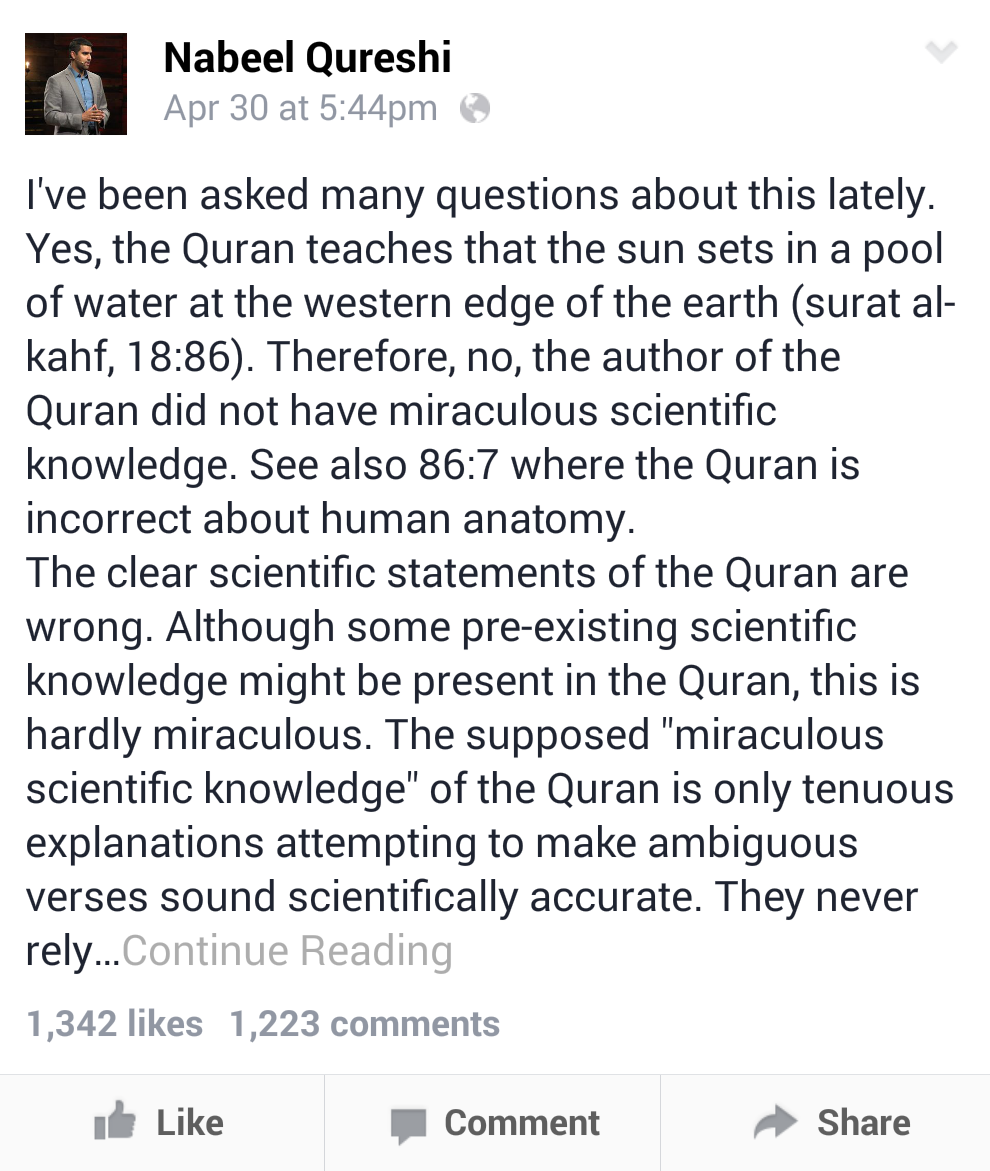
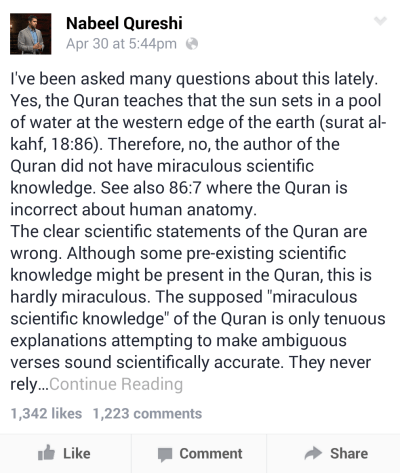
Most people understand that language has depth. That language has devices that are used to convey ideas, thoughts and beliefs beyond a one dimensional literalistic paradigm. Most people are familiar with the sciences of exegesis and hermeneutics, which are often employed in helping us to understand scripture. Now, that is most people and not all people. One of those people who doesn’t understand these things is Nabeel Qureishi. For example, he recently posted this:
wpid-2015-05-15-11.34.35.png.png


Now, see if he had read his Bible, even given it a cursory glance he’d come to realise that the phraseology of the Semitic people who wanted to describe a limit or boundary as given by the sea would often use the language of, “where the sun sets”. So for example, we read in the Qur’an 18:85-86:

He set out (westwards) on an expedition, Until, when he reached the setting of the sun, he found it [as if] setting in a spring of dark mud, and he found near it a people.

So, as these passages state, he set out on a journey through the land until he reached a limit where he found a people. What was used to describe this limit? The sea and the sun setting. This was a phrase used to describe the limit of one’s journey being bounded by some body of water be it a sea or an ocean, a lake etc. In Nabeel’s very Bible, such phraseology is used:

“From the wilderness and this Lebanon, even as far as the great river, the river Euphrates, all the land of the Hittites, and as far as the Great Sea toward the setting of the sun will be your territory.” – Joshua 1:4

“See, I have apportioned to you these nations which remain as an inheritance for your tribes, with all the nations which I have cut off, from the Jordan even to the Great Sea toward the setting of the sun.” – Joshua 23:4

Some translations don’t use a literal rendering of the words, they try to contextualize them. So in the NASB, NIV and other similar translations they try to translate a text according to its usage and not according to its literal meaning. The Qur’an in most cases uses a literal rendition of the Arabic. The literal rendition of the above Bible passages, uses the exact same terminology that the Qur’an does. We read from the ISV:

Your territorial border will extend from the wilderness to the Lebanon Mountains, to the river—that great River Euphrates—all the land of the Hittites—as far as the Mediterranean Sea where the sun sets.

In one instance, there had to be a citation note explaining why a portion of this passage was excluded from the main translation:

Now look, I have allocated these nations that remain as an inheritance for your tribes, including all of the nations that I have eliminated, from the Jordan River to the Mediterranean Sea to the west.[b]

b. Joshua 23:4 Lit. Sea that faces the setting sun

The reason that most Christians are unfamiliar with this phrase is because most English Bible translations, translate “the setting of the sun into the sea” or “the setting of the sun by the sea”, to “the west” or to “the Mediterranean Sea”. So when they see such a phrase in the Qur’an, they don’t make the connection between a descriptive term and its use in scripture by the language of the people at that time. This is what happened in the case of Nabeel. He is not familiar with the language of the Bible, nor with the language of the Qur’an.

To aid Nabeel, I’ve used a popular language device in the title of this post. “The Sun Sets on Nabeel Qureishi,” is an oft used language device. Given that Nabeel seems to read things literally, I wanted to point out to him that not everything can or should be read literally. Here’s some examples of language devices being used in sentences and they aren’t meant to be understood literally:

  • I want to address the elephant in the room.
  • The rolling hills of the countryside.
  • It’s raining cats and dogs.
  • The sun set on Jim’s career.

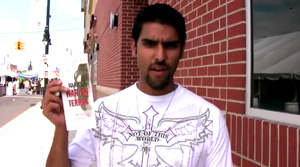
So, Nabeel, I’m addressing you, the guy in this picture:

cc-2015-nabeelqureishi

“The Sun Sets on Nabeel Qureishi,” does not mean that I think the sun is literally falling on top of you. It does not mean that I want the sun to harm you. It does not mean that I think the sun goes up or down. It quite simply, does not mean anything literally. In modern English, the sun setting for someone can have varying meanings. It can mean they’re shining less brightly as a person, and just so I don’t confuse you, by shining brightly I mean they are not performing according to expected standards of normalcy. In some cases it also means the person is dim (again not literally, but in terms of wit, see: dimwitted), or in decline (again not literally in decline, like as if they’re sitting or stooping, I mean performance or career wise) in some way.

I hope you’ve learned something very valuable today. You can swap a t-shirt for a suit, but it doesn’t make you any smarter. As for his claim on Qur’an 86:7, I didn’t want to confuse him any further than he already is, but for everyone else here’s an excellent article explaining the basic Arabic usage of the terms in the passage.

and God knows best.

Christian to Samuel Green: “You clearly don’t know anything about Islam”

Well this is embarrassing. Pastor Samuel Green who specializes in “ministering to Muslims” ran into quite an awkward argument recently with a fellow but prominent London based Christian missionary. The argument revolves around Green’s lack of education when it comes to Islam, which has upset and embarrassed fellow Christians as Green prides himself on his “engaging with Islam”. Someone had to burst his bubble and it was not pretty:

wpid-2015-03-23-13.52.17.png.png


We’d like to thank the Christian community for finally bringing to light what we all know about Samuel – he doesn’t know anything about Islam.

and God knows best.

November 2014 – A Month of Records Due to Jay Smith!

The month of November 2014 has brought Calling Christians some great new achievements that were driven by Jay Smith’s missionary behaviour! Due to Smith’s exaggerated claims during his debate with Dr. Ally, I wrote a paper in response to him, that paper led Calling Christians to new heights:

We’d like to thank Jay Smith for leading Calling Christians to new heights, to new successes and to giving us a wider audience than we’ve ever had! More to come! Look out for posts in the next few days about Jay’s planned response to the paper, his arguments, his references and his criticisms. Unknown to him, sources close to him are embarrassed by his lack of honesty and have decided to fill us in on his plans!

and God knows best.


Release: A Critical Analysis of Jay Smith’s Mistakes About the Qur’an [Update]

Update: I have been made aware that some persons are unable to access the paper via Scribd, you can therefore click this link and download the PDF directly: Response to Jay Smith’s Mistakes.

All Praise is due to Allah alone. The paper has undergone some minor changes, which are listed in the paper under the title of, “Structure of the Paper”. A formatting error for some headers were corrected, especially for Appendix B.

and Allah knows best.

Originally Published: 12/11/14, 6:46 a.m.

New Early Manuscript Copy of the Qur’an Discovered?

As brought to my attention by Br. Kaleef of Discover the Truth, a recent news article has been circulating mentioning the “discovery” of an extremely early Qur’anic manuscript in Tubingen University in Germany:

Scholars at the Coranica Project, part of the University of Tübingen, examined a manuscript written in Kufic script, one of the oldest forms of Arabic writing. Using carbon-14 dating on three samples of the manuscript parchment, the researchers concluded that it was more than 95 percent likely to have originated in the period 649-675 AD.

The manuscript is one of more than 20 fragments of Kufic script held by the Tübingen University Library. This particular item was donated to the university in the 19th century.

However, as Dr. Saifullah has duly pointed out, Islamic Awareness has been aware of this collection of manuscripts since 2010 and has for sometime possessed photos of them which have been published on the site, they were already dated to the first century AH as well. We’d like to finally thank the rest of the world for catching up with us!

and Allah knows best.

Jay Smith’s Story Does Not Add Up

On Sunday 16th November, two prominent UK Muslim speakers/ debaters, Br. Ayaz and Br. Zakir Hussein both went to Speaker’s Corner, Hyde Park (London) to confront Jay Smith. They had decided to challenge him to a debate, the video of that challenge will be uploaded soon. The reason I’m mentioning this, is that while speaking to Smith, they told him that, “Ijaz says hi!“, to which he responded that I was a liar and that he’s preparing a response to my paper.

The problem is, and I hope he realises this soon so that he can stop embarrassing himself – he doesn’t need to prepare a response to me. Following the debate, Smith released an email in which he explains that he’s been studying the topic of Qur’anic manuscripts for sometime, with the dates of January 2014 and March 2014 being mentioned. Given that the debate happened at the end of September, it would then mean that Smith had been preparing for this debate for some 9 months or so.

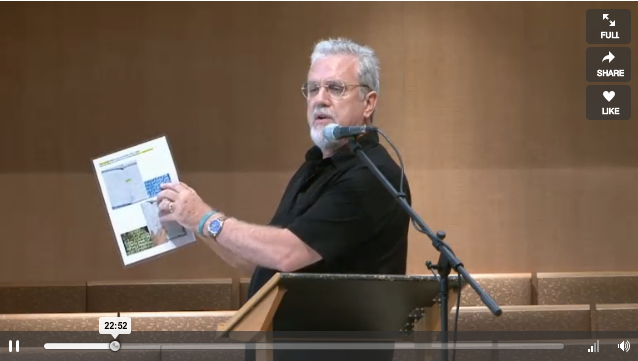
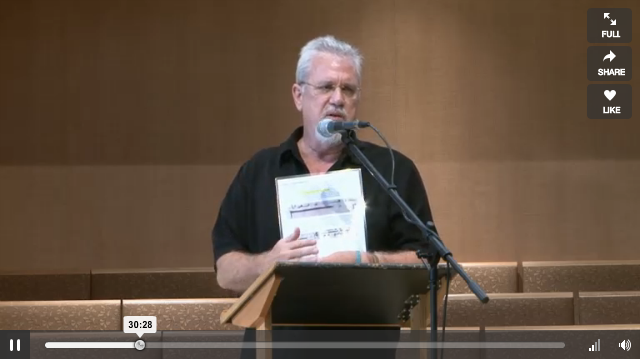
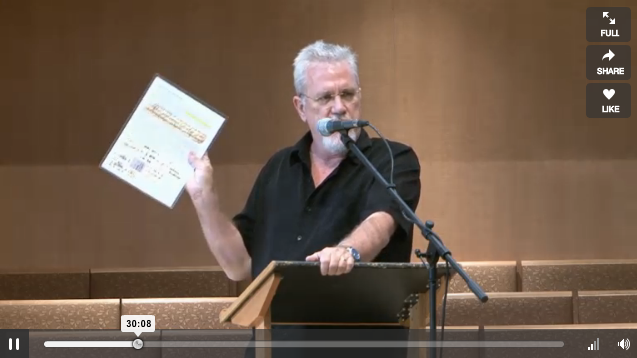
With 9 months of preparation, research and study, he entered into the debate with what appeared to be a large stack of papers which contained that very research, of which he shared several of them with the audience:

cc-2014-smithlied1

cc-2014-smithlied2

cc-2014-smithlied3

cc-2014-smithlied4

cc-2014-smithlied5

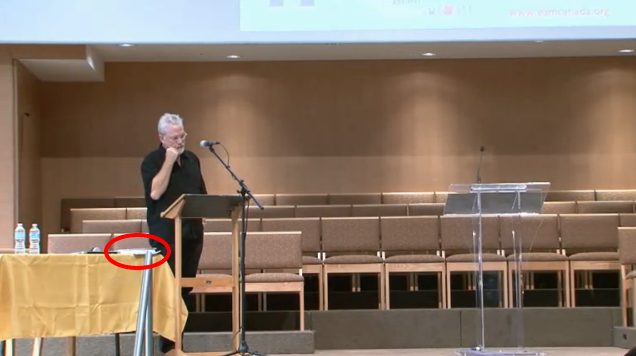
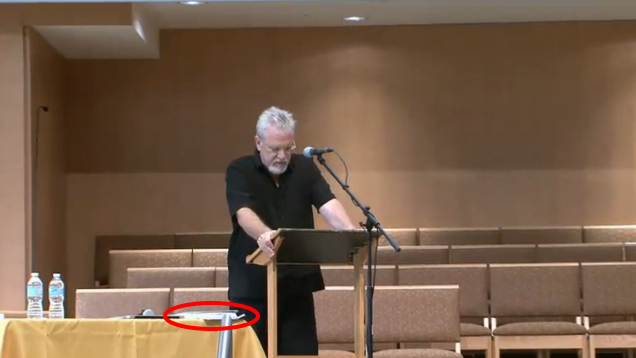
At one point in the debate, he remarked that he’d share his research with the public, and that it was available for anyone to see should they request it. So what does this all mean? Since the day of his debate with Dr. Shabir, he has possessed 9 months of research, collected into that large stack of papers several inches thick on the table beside him. So, the problem is, what does he need to prepare in response to me, if he already has 9 months of research several inches thick already prepared?

Especially when he declared that the research was ready for anyone to see! So what exactly does he need to prepare? Either he did his research over a period of 9 months and had it ready on the day of the debate, or, given the countless errors and lies I found him making during the debate, he really has no research to present for us and is now scrambling to get something done. So Smith, which is it? It’s time for you to clear the air. Either you lied during the debate or you lied after the debate and on Sunday when you made those remarks. Which is it? Can’t get your story straight it seems.

Since you said the research would be shared with anyone who requests it, then I proudly declare that on this day, I request it! Send it over to callingchristians@gmail.com, I’ll be waiting! For everyone else, you can download and view the 53 page paper on Qur’anic manuscripts here.

and Allah knows best.

Why is your critique of Jay Smith’s statements not on this site?

I’ve been getting a lot of questions concerning the validity of a link in circulation of a Google Doc’s document purported to be from me concerning a critique of Jay Smith’s mistakes and deceits during his recent debate with Dr. Shabir. I would like to confirm that I am the author of that document in circulation. Initially, I had not planned to publish it until I was finished writing it. However, as the document got larger and as many were asking when it would be released, I decided to make public a draft of the article I was preparing on the subject matter. As with any draft, there are typos, incomplete information, rough photos of portions of book quotes that have not been transcribed, differences in citation styling, etc. While the information in the document is accurate, and the citations also accurate, I don’t think that the current version is the final version which would be published on this site.

I have had a few people read it over and check for errors or incorrect responses. No one has found any issues with the contents of the draft so far. This document will take some time to complete. This is due to the tedious effort of having to listen carefully to Jay’s statements, followed by transcribing them and finally citing the time of the video in which he makes those statements. So it involves listening to a 1 minute talk, a number of times which runs into quite a number of minutes per mistake he makes. Then I have to get the relevant quotes and references needed to respond to his deceits, which also takes time. There is also the problem of Jay never citing his works from which he takes his claims from. He’s dropped a number of names, but doesn’t mention which journal, paper, study or book they’re from. Luckily I’m quite familiar with the authors he mentioned and I know where he’s gotten several of his claims from.

It’s honestly quite frustrating to listen to him say something, reference a speaker as a source, go to that source and find the author saying the complete opposite. I’ve tried to be very fair with Jay and assume he may have misread or misspoke, maybe he was nervous and said things he shouldn’t have said. Despite doing so, I have come to the conclusion that he’s intentionally not referencing his sources of information, as they directly contradict and disagree with his claims. This also explains why Dr. Shabir did not choose to critique Jay’s claims as they are so fanciful and inaccurate, the goodly Dr. would have spent 100% of his speaking time on correcting Jay, than speaking on the topic itself. I have the documents that Dr. Shabir circulated during the debate, which the attendees received. I’ll upload them and place links for them in a separate post.

I’d like to take this opportunity to ask that if anyone is familiar with the subject matter, to go through my response to Jay Smith and offer their criticisms or advice. There are two versions of the draft, one version has reached error #20, while the public draft has reached #13. I update the public draft in batches, not after every update made to the private draft. This is so that I can manage my progress as I go along, without publishing information which may be inaccurate or unreliable. I’m making sure that every quote I reference is duly cited and in cases where possible – I attempt to link to the source. Due to real world difficulties, I can’t dedicate much time per day to completing the article. So progress on some days would be more than progress on other days. I’ve seen criticism from some Christians that I haven’t responded to all of Jay’s arguments and I’d like to indicate to such people that this is a work in progress and not yet complete or finalized in any way.

I do not have a scheduled completion date, but most likely the article would be completed before Monday the 6th. While I’m thankful the document is getting a significant amount of views and is being circulated by a large number of people, I do hope that when the finalized article is published, that many more can benefit from it at that time. There have been different ideas as to what the next step is. Some have asked if I have sent Jay any of these questions from the document – I have, it was sent to him after the debate through a friend attending the debate, however he opted not to reply to them. Some have asked if it will be sent to him and my response to this is that I believe he was already made aware of the document. Others have asked why Dr. Shabir has chosen not to reply to Jay’s claims or if I’m writing this on behalf of Dr. Shabir. I suggest that if one wants to question the reasons for the Dr.’s actions that they send him an email themselves. I would like to make it clear that he has not asked me to do this and I am unaware as to whether he knows about this document or not.

I will try to complete it as quickly as I can, but I ask for your prayers and patience during this time.

and Allaah knows best.

Explanation: Qur’aans that contain less or more Surahs

Many Christian polemicists argue that certain companions of the Prophet (peace and blessings of God be upon him) had varying amount of Surahs in their copies of the Qur’aan. Some had 112, others had 111, etc. Br. Waqar has refuted those claims in detail here. While I won’t go into explicit detail, I will provide the Muslim with the tools to respond to such claims in a simple and concise manner.

The Argument:

Sahabi X only had Y number of Surahs in his copy of the Qur’aan, therefore he didn’t believe in the Surahs not included in his copy.

Responses:

  • The question must be asked to the Christian, where does the Sahabi (companion) say that he doesn’t believe in the excluded Surahs? The truth is, nowhere is that said. Therefore, the onus (responsibility) is on the Christian to provide evidence for such a claim.
  • Codex is a collection, Canon is an established list, so the canonical codex of the Qur’aan is a Qur’aan consisting of all the Surahs from al-Fatihah to an-Nas, all 114 of them. Many of us have booklets at home that contain the last 10 Surahs, or Surah ar-Rahman with Surah al-Baqarah. Do we consider the excluded Surahs from these booklets to not be Qur’aanic? Of course not! Therefore, not every codex is a canon of the Qur’aan. A codex with 2 Surahs does not mean that Uncle Khan or Aunty Summayah believes the Qur’aan only has 2 Surahs or 10 Surahs.
  • So we must ask the Christian, since every codex is not indicative of a canon, why do you apply this belief to the Qur’aan?
  • We can also turn their own reasoning back onto them. Since Paul wrote 10 of his 13 epistles, then the New Testament according to Paul is only his epistles and not the four Gospels, where does he say he believes in the 4 Gospels? Since the Christian says every collection (codex) is a canon, then Paul’s canon of the New Testament, excludes the Gospels. If the Christian says this is wrong reasoning, shake their hands and congratulate them on using such reasoning in the first place.
  • We can further this by saying, since none of the 4 Gospels refer to Paul’s letters and we have no evidence that any of the Gospel authors knew of Paul’s letters, then the canon of the New Testament for the Gospel authors is their Gospel and their Gospel only. So the New Testament to the anonymous author of the Gospel of John, was just the Gospel of John, to the anonymous author of Matthew, the only canonical New Testament book was his own book.

Closing the Argument

We can make things worse for the Christian – yes, worse, much worse. If we go to the earliest codices of the Bible, namely Codices Sinaiticus, Vaticanus, Alexandrinus and Ehpraemi Rescriptus, they all contain extra books, and some even have missing books. Therefore we must ask the Christian, does he take those codices to be canons, and if not, why does he apply such a reasoning to the Qur’aan?

Conclusion

One of the more popular proponents who propagate such an argument is that of Pastor Samuel Green. He’s fond of repeating it, but is unable to see the backward, and illogical reasoning he employs in formulating such an uneducated argument. If you see anyone quoting Pastor Green’s article, send them this link, or use the arguments within – for just like the Pastor, when faced with these responses they will either go silent, try as best as they can to ignore you or simply keep repeating it without attempting to understand what they are saying. If the Christian chooses to be honest, then he would drop this argument and apologize for using it in the first place.

and Allaah knows best.

Does the Qur’aan affirm the Bible?

Question:

Does the Qur’aan affirm the Torah and the New Testament?

Answer:

There is a fundamental difference between what Muslims consider the Bible to be, and what the Christians and Jews consider the Bible to be. To understand these differences, please note the following verses:

وَلَقَدْ آتَيْنَا مُوسَى الْكِتَابَ وَقَفَّيْنَا مِن بَعْدِهِ بِالرُّسُلِ ۖ وَآتَيْنَا عِيسَى ابْنَ مَرْيَمَ الْبَيِّنَاتِ وَأَيَّدْنَاهُ بِرُوحِ الْقُدُسِ

And We did certainly give Moses the Torah and followed up after him with messengers. And We gave Jesus, the son of Mary, clear proofs and supported him with the Pure Spirit. (2:87)

وَقَفَّيْنَا عَلَىٰ آثَارِهِم بِعِيسَى ابْنِ مَرْيَمَ مُصَدِّقًا لِّمَا بَيْنَ يَدَيْهِ مِنَ التَّوْرَاةِ ۖ وَآتَيْنَاهُ الْإِنجِيلَ فِيهِ هُدًى وَنُورٌ وَمُصَدِّقًا لِّمَا بَيْنَ يَدَيْهِ مِنَ التَّوْرَاةِ وَهُدًى وَمَوْعِظَةً لِّلْمُتَّقِينَ

And We sent, following in their footsteps, Jesus, the son of Mary, confirming that which came before him in the Torah; and We gave him the Gospel, in which was guidance and light and confirming that which preceded it of the Torah as guidance and instruction for the righteous. (5:46)

In the Islamic belief, the Prophets Moses and Jesus (may God’s peace be upon them), both were given scripture – to Moses the Torah and to Jesus the Injeel.

Read more

« Older Entries Recent Entries »