Category Archives: Muslim and Non-Muslim Dialogue

Why does Allah make Oaths in the Qur’an?

بسم الله الرحمن الرحيم الحمد لله وحده و الصلاة و السلام على من لا نبي بعده و على آله و أصحابه أجمعين

A comprehensive study of the meanings and significance of the Allah’s oaths in the Qur’an. It answers the misgivings and lies about Islam’s connection with pagan ideas based on these oaths. A careful study of the whole issue with reference to Qur’an, pre-Islamic Arabic poetry, Greek literature and with an appeal to reason. Read more

What does Allah’s “Salaah” mean?

This query was brought to my attention by Anthony Rogers (see more information about him here and here), who quoted a comment by Sam Shamoun, the comment is:

You know full well what the actual position is but still, like your prophet did before you, you can’t help but deliberately misrepresent it. The position which you once claimed to have believed is that Jesus is God in essence and distinct from God the Father. Therefore, Jesus is praying to God the FATHER, not himself.

Let’s respond to this really quickly. Sam is saying that Jesus is not praying to himself, but Jesus the God is praying to the Father the God. So God is praying to God. So God who is praying to God, is not praying to God (himself) but to another God. How does one God pray to another God? How is this even Monotheistic? In order to deceive himself and distract Christians, he attempted to misrepresent Islamic beliefs:

However, speaking of a bizarre religion, you don’t get anymore bizarre than your [insult snipped] praying to himself!

They are those on whom are the prayers (salawatun) from their Lord and mercy (rahmatun), and it is they who are the guided-ones. S. 2:157

He it is who prays (yusallee) for you and His angels too, to bring you forth out of the darkness into the light, for He is merciful to the believers. S. 33:43 Palmer

Verily, God and His angels pray (yusalloona) for the prophet. O ye who believe! pray for him (salloo) and salute him with a salutation! S. 33:56 Palmer

The hadith reports also mention Allah praying for people:
1387. Abu Umama reported that the Messenger of Allah said, “Allah AND His angels AND the people of the heavens AND the earth, EVEN the ants in their rocks AND the fish, PRAY for blessings on those who teach people good.” [at-Tirmidhi] (Aisha Bewley, Riyad as-Salihin (The Meadows of the Righteous), Book of Knowledge, 241. Chapter: the excellence of knowledge; bold, capital and italic emphasis ours)

And here is an article where I discuss this issue more in-depth and refute the lame attempt by your fellow Muhammadan-turned apostate-turned Muhammadan-turned apostate again-turned Muhammadan one more time Ibn Unaware: [link snipped]

So perhaps you can be so kind and answer my questions. To whom does your deity pray when he joins the angels in praying for Muhammad and so-called believers? Since the angels are obviously praying to Allah does this mean that Allah is also praying to himself?

Bizarre indeed!

I didn’t think I needed to mention this, but words have context. Context is defined as, “The part of a text or statement that surrounds a particular word or passage and determines its meaning.”[1] As a toddler, when one is taught how to read, we learn that words, based on their context, affects their meaning. For our purposes, this phenomena is referred to as relational nouns, one study on its uses mentions:

Relational nouns have some commonalities with verbs  and prepositions, in that their meanings are centered around  extrinsic relations with other concepts. Relational nouns are  also similar to verbs in that they are semantically  unsaturated (i.e., they take arguments). A relational noun  takes an argument (often not obligatory) and assigns a  thematic role.[2]

Now, it’s quite obvious I don’t expect someone of the likes of Sam Shamoun to make sense of these things. For a person to not know that words have variant meanings dependent on context, it’s therefore understandable that he’d be intellectually stunted and as a consequence, misrepresent what the Qur’aan or Ahadeeth say. One example of relational nouns is the word ‘Seerah‘, outside of Islamic delimitations it means ‘story, history‘, but when Islamically used, it refers to the Prophet’s (peace and blessings of Allaah be upon him) biography. Surely even someone with the level of ineptitude of Shamoun can grasp this. To cater for his level of understanding, we can even use English examples:
  1. The space of the car was huge.
  2. The car went into space.
In the above example, there are two similar nouns, ‘car‘ and ‘space‘, but they have two completely different meanings. Whereas the meaning of ‘car‘ is the same, the other noun, ‘space‘, although its the same word, due to its context, it has two completely different meanings. The meaning of the noun space, is therefore, relational. Its meaning is relative. This is an easy example. Given what we’ve just learned, it is therefore simple to understand that the word ‘Salaah’ has a relational meaning, dependent upon the noun it is used upon. While it does mean prayer in the conventional sense when referring to any creation of God, most usually mankind and Jinn, when it is used in relation to God, it has a totally variant meaning. We’ll use one of Sam’s quoted verses, 33:43 to illustrate this relational meaning:

(He is such that He and His angels send blessings to you), It means that when you have become used to dhikrullah in abundance and have become regular in recounting the perfections of Allah morning and evening, Allah would honor you and respect you by bestowing His Blessings and by the angels supplicating for you.

The word ‘Salah’ has been used in this verse for Allah Ta’ala as well as for the angels but the applicable meaning are different. For Allah it means His bestowing blessings and for angels who have no volition on their own, it means their supplication to Allah to bestow His blessings.

Sayydina Ibn ‘Abbas (may Allah be pleased with him) has stated that Salah from Allah is a blessing, from angels it is prayer for forgiveness and from humans it is supplication. The word Salah carries all the three meanings.

(Their greeting, the Day they will meet Him, will be, “Salam” – 33:44). This is the explanation of the Salah that is sent to believers from Allah.[3]

This therefore clarifies the misconception that God ‘prays’ like humans. The source of this misconception is due to Sam Shamoun’s lack of grammatical study, he is uneducated in terms of the English language and the Arabic language, thus technical constructs based on language study escapes his realm of education. Although common to us, for those of us who took language courses at the High School and University Level, Sam did not have these opportunities, so we should not be surprised at his ignorance.
He’s also committed a classical exegetical fallacy and a logical fallacy. The exegetical fallacy would be the, “Reading Between the Lines Fallacy”, Professor William D. Barrick explains:

This fallacy falls into the category of logical fallacies that Carson discusses in Exegetical  Fallacies. The unwarranted associative fallacy “occurs when a word or phrase triggers off an associated idea, concept, or experience that bears no close relation to the text at hand, yet is used to interpret the text.[4]

Recall that Sam is a Trinitarian Christian, in his mind, there is no difference between relational nouns in terms of God and man, since his God is a man. Whereas for us who believe in monotheism, God is not a man and therefore the terms that apply to God will have distinct meanings from those that apply to mankind. The other fallacy is the Tu Quoque fallacy, essentially the kindergarten argument of ‘you too’. Since he believes God is a man who prays to God, he’s trying to force his belief upon the Islamic faith, however in doing so, he abandons all sense of reasoning, education and dignity.

We pray that Shamoun realises his lack of education and seeks to attend classes so as not to humiliate himself once more.

and Allaah knows best.

[1] – “Context“, The American Heritage Dictionary of the English Language.
[2] – “Context Sensitivity of Relational Nouns“, Asmuth, J. & Gentner, D. (2005).
[3] – “Qur’aan 33:43“, Tafsir Maari’ful Qur’aan, Mufti Muhammad Shafi, page 182.
[4] – “Exegetical Fallacies“, Prof. William D. Barrick.

Why didn’t Allah send the Qur’aan in a Universal language?

Muslims are often asked this question. If the Qur’aan is from God, why didn’t He send it in a language we can all understand. My response to that question would be, what language would you have wanted him to send it in? Everyone thinks one language or the other is easier to understand. Furthermore, there is no such thing as a universally spoken language. All language is learned and developed. Languages differ, they have variant language devices (metaphors, similes, rhetoric, emphases, etc ) and semantics (meaning), as well as syntax (sentence structure) constructs. There exists no such universal language, so even if God did send the Qur’aan to us in a universal language – we wouldn’t be able to make sense of it since we don’t know what one would look like and one currently doesn’t exist. What’s worse is that we’d all have to learn this new language. Considering that the point of this question is that you shouldn’t have to learn a new language, a universal language that you still have to learn, defeats its very purpose.

wa Allaahu ‘alam.

The sacrificial son: Isma’il or Isaac?

بسم الله الرحمن الرحيم الحمد لله وحده و الصلاة و السلام على من لا نبي بعده و على آله و أصحابه أجمعين

Allah had ordered Prophet Ibrahim (Abraham) –peace be upon him- to sacrifice his son. Here, we will be looking in detail from the Torah, the Qur’an and early Islamic narrations for the identity of the sacrificial son. This piece is entirely based on the work [1] of Hamiduddin Farahi and can be considered as a summarized translation of his work.

Introduction

We know from the Torah itself that it is not in the original form that was revealed by Allah.

Concerning the prophets: My heart is broken within me; all my bones tremble. I am like a drunken man, like a strong man overcome by wine, because of the Lord and his holy words.The land is full of adulterers; because of the curse the land lies parched and the pastures in the wilderness are withered. The prophets follow an evil course and use their power unjustly.“Both prophet and priest are godless; even in my temple I find their wickedness,” declares the Lord.“Therefore their path will become slippery; they will be banished to darkness and there they will fall. I will bring disaster on them in the year they are punished,” declares the Lord.“Among the prophets of Samaria I saw this repulsive thing: They prophesied by Baal and led my people Israel astray.And among the prophets of Jerusalem I have seen something horrible: They commit adultery and live a lie. They strengthen the hands of evildoers, so that not one of them turns from their wickedness. They are all like Sodom to me; the people of Jerusalem are like Gomorrah.”Therefore this is what the Lord Almighty says concerning the prophets: “I will make them eat bitter food and drink poisoned water, because from the prophets of Jerusalem ungodliness has spread throughout the land.”This is what the Lord Almighty says: “Do not listen to what the prophets are prophesying to you; they fill you with false hopes. They speak visions from their own minds, not from the mouth of the Lord.They keep saying to those who despise me, ‘The Lord says: You will have peace.’ And to all who follow the stubbornness of their hearts they say, ‘No harm will come to you.’But which of them has stood in the council of the Lord to see or to hear his word? Who has listened and heard his word?See, the storm of the Lord will burst out in wrath, a whirlwind swirling down on the heads of the wicked.The anger of the Lord will not turn back until he fully accomplishes the purposes of his heart. In days to come you will understand it clearly.I did not send these prophets, yet they have run with their message; I did not speak to them, yet they have prophesied.But if they had stood in my council, they would have proclaimed my words to my people and would have turned them from their evil ways and from their evil deeds.“Am I only a God nearby,” declares the Lord, “and not a God far away?Who can hide in secret places so that I cannot see them?” declares the Lord. “Do not I fill heaven and earth?” declares the Lord.“I have heard what the prophets say who prophesy lies in my name. They say, ‘I had a dream! I had a dream!’How long will this continue in the hearts of these lying prophets, who prophesy the delusions of their own minds? They think the dreams they tell one another will make my people forget my name, just as their ancestors forgot my name through Baal worship. Let the prophet who has a dream recount the dream, but let the one who has my word speak it faithfully. For what has straw to do with grain?” declares the Lord. “Is not my word like fire,” declares the Lord, “and like a hammer that breaks a rock in pieces?“Therefore,” declares the Lord, “I am against the prophets who steal from one another words supposedly from me.Yes,” declares the Lord, “I am against the prophets who wag their own tongues and yet declare, ‘The Lord declares.’ Indeed, I am against those who prophesy false dreams,” declares the Lord. “They tell them and lead my people astray with their reckless lies, yet I did not send or appoint them. They do not benefit these people in the least,” declares the Lord. “When these people, or a prophet or a priest, ask you, ‘What is the message from the Lord?’ say to them, ‘What message? I will forsake you, declares the Lord.’ If a prophet or a priest or anyone else claims, ‘This is a message from the Lord,’ I will punish them and their household. This is what each of you keeps saying to your friends and other Israelites: ‘What is the Lord’s answer?’ or ‘What has the Lord spoken?’ But you must not mention ‘a message from the Lord’ again, because each one’s word becomes their own message. So you distort the words of the living God, the Lord Almighty, our God.[2]

Read more

Christian Commenter Discovers Quotation Marks

This is no joke, while having a little back and forth on the authorship of Colossians, a zealous Christian commenter accused me of ‘plagiarizing’ the work of James Dunn. Why would he accuse me of such a thing? Well, he may be unfamiliar with what these are:


cc-2014-misc-quote


I put words between quotation marks, you know, to indicate they were, errr – quotes? Sadly, this individual, who ironically calls himself Paul, decided to start 2014 with a bang. Apparently by using quotation marks, I was attributing the words between the quotation marks to myself and not actually quoting someone, which is what the purpose of quotation marks are – to use the words of others. The individual got upset when I chose not to approve his 500 word rant/ comment on his ignorance of what a quotation mark is or what a quote was, so he threatened to use screenshots of what he wrote. By all means, go ahead, let the world know that Paul, does not know what quotation marks are, it’d be splendid.


Abrogation means Allah cannot make up His “mind”!

Another common, yet silly claim. Before I explain the nature of abrogation in Islam, we can easily demonstrate that God also abrogated laws in the Bible.

  • In Genesis God commanded Adam and Eve’s children to intermarry.
  • Christians today consider a brother and sister’s sexual relations to be the sin of incest.

Did God command Adam and Eve to do a sin? No, according to Christian (and Jewish) beliefs, sexual relations between a brother and sister only became a sin known as incest due to the 7 Noahide Laws. Another easy example is:

Lastly, anyone can read where Christ alters several of God’s laws (God changing God’s laws!?)  in Matthew 5. From this, we ask the Christian, can’t your God make up His mind as well? Surely they are being hypocritical in their speaking. However, from the Islamic perspective, Allah says in the Qur’aan:

We do not abrogate a verse or cause it to be forgotten except that We bring forth [one] better than it or similar to it. Do you not know that Allah is over all things competent? – Qur’an 2:106.

Before the revelation of the Qur’aan, each message sent with a Prophet was specific to each peoples the Prophet was sent to. For example, the Torah was sent to the Children of Israel during Moses’ time, whereas the Injeel was sent to the Children of Israel during Christ’s time. This is simple to understand, each people had different cultures and so God sent commandments to deal with the people of each culture. By this, we can understand that it isn’t that God kept changing His “mind” over the laws, rather He sent different laws to deal with the beliefs, attitudes, actions (habits) and culture (norms and values) of each tribe, nation of peoples. However, with the revelation of the Qur’aan, God has sent a law for all of mankind.

Unlike previous nations were entire groups of peoples existed without communicating with each other or knowing of each other’s existence, today I can call Japan and speak to a Geisha, or go on YouTube and see angry Christian missionaries screaming about Muslims, in this age of globalization, there is no need for a revelation to be sent to each and every nation individually, rather one message can now reach all nations of the earth with the click of a finger – one message for all of mankind.

In conclusion, it is not that God changed His mind about anything, rather it is that God sent a laws to cater to each tribe/ group/ nation of peoples according to the state of belief they were in, so that they may be guided. One common example is the prohibition of alcohol in Islam. Gradually alcohol was prohibited, rather than one command prohibiting it completely – in this way, the people developed the habit of consuming less alcohol and thus stopping consumption of it became drastically easier for them.

and Allaah knows best.

If Allah is so powerful, why can’t He become a man?

At first glance, this seems like a pretty strong argument. God in both Christianity and Islam is defined to be all powerful. So if God is all powerful, why does Christianity say He can become a man and Islam say He cannot? The Christian’s argument does not include a deep study on the nature of God and due to this, it is very simple to debunk this argument.

Defining God

Both Muslims and Christians believe that God is an all powerful being.

God’s Nature is Absolute

Both Muslims and Christians believe that God’s nature does not change, He was all powerful, is all powerful and will always be all powerful.

Man’s Nature Differs 

Both Muslims and Christians believe that mankind is not all powerful.

Muslim Response

If God is all powerful and man is not all powerful, can God’s nature of being all powerful, change to becoming not all powerful? How can an all powerful God become less powerful?

Conclusion

  • God is all powerful.
  • If God gains power, then by definition He was not all powerful before and thus cannot be considered a God.
  • If God loses power, then by definition He is not all powerful and thus cannot be considered a God.

Since a Christian believes that a God can become a man, and a man is not all powerful, how can God remain all powerful yet be unable to defend himself (Christ was allegedly subject to Roman torture) and unable to eat (so hungry he cursed a fig tree)? If God is all powerful, no being should be able to overcome him, since Christ was overcome, then he clearly was not a God. So the simple answer is: Whereas God is always all powerful, man is not.

A Christian apologist may argue Jesus ‘chose’ to take all of these things unto himself, that would still not change the fact that he chose to take on an attribute of weakness by becoming a man, thus meaning he cannot be God because God is always all powerful, and does not change. So by no longer being all powerful, he is no longer God, and the very fact he changed and took on a new nature, when God does not change and always is, also again means he can’t be God.

and Allaah knows best.

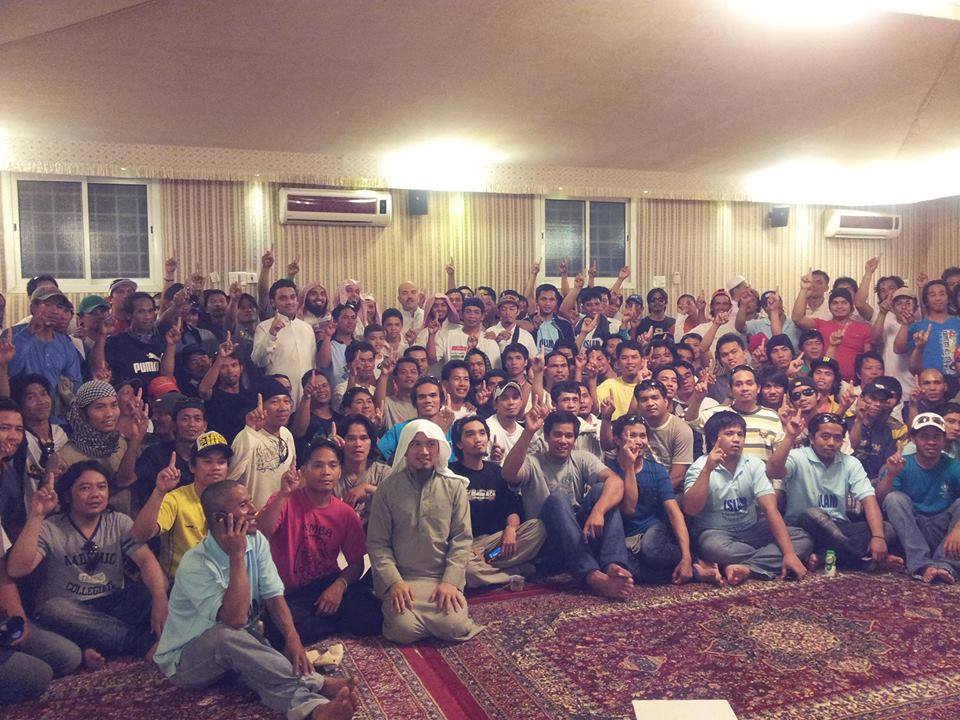
[Updated: More Conversions] 125 Filipino Christians Convert to Islam

Great news, Br. Ismael Espanol (pictured with the group below) has announced that 125 Christians from the Philippines have converted to Islam and have left Christianity behind:

cc-2013-125filipinoconverts

God has certainly guided the Filipino people who are accepting Islam in great numbers, freeing them from the Cross, and delivering them with freedom in Monotheism to worship the Creator as He should be worshipped.

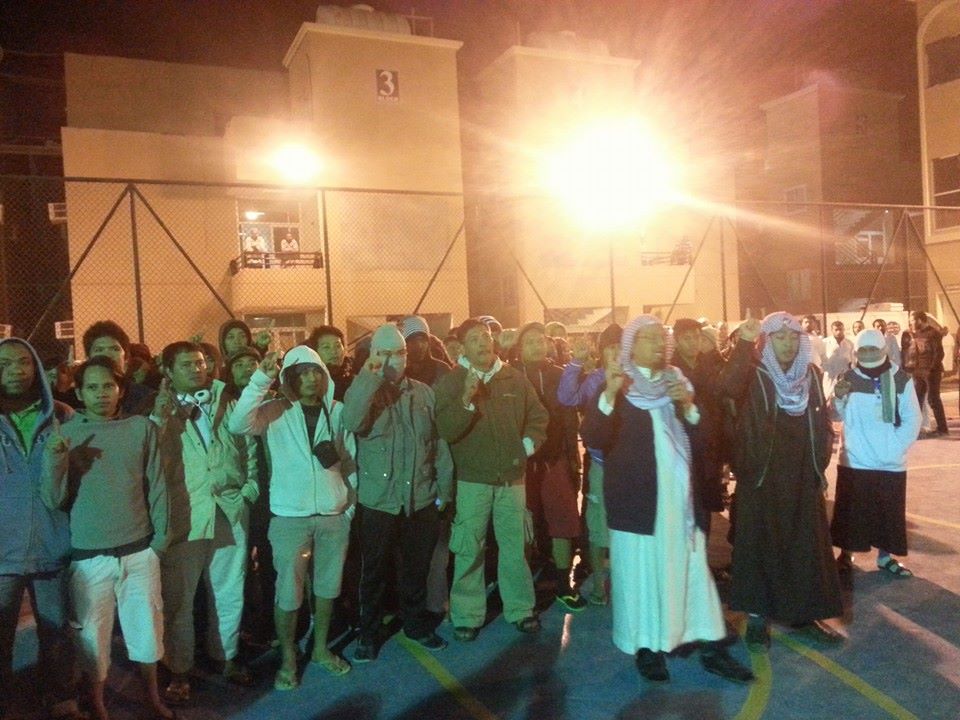
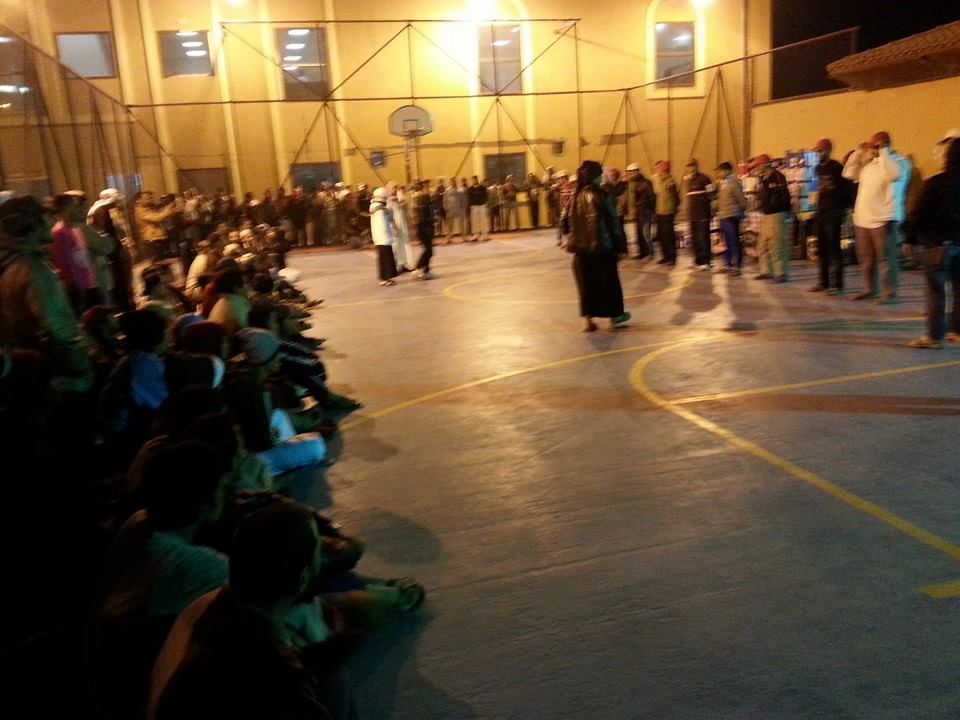
Update:

Br. Tariq Aziz has posted photos of another mass conversion of Filipinos:

cc-2013-filipino1

cc-2013-filipino2

wa Allaahu ‘Alam.

« Older Entries Recent Entries »