Missionary Mishap: Jonathan on the Trinity & Tawheed
Our Br. Yahya has produced quite an interesting video, alongside one of Br. Darkness2Noor’s clips.
and God knows best.

Search
Our Br. Yahya has produced quite an interesting video, alongside one of Br. Darkness2Noor’s clips.
and God knows best.
Quite an interesting comment was posted on the article regarding Sam and Jonathan’s crass behaviour. It seems as if some good came out of rebuking them for their actions:

and God knows best.
and God knows best.
I write this with extreme disappointment and sadness. A few months ago, Jonathan broke unto the Muslim-Christian interfaith debate scene. In his debate with Dr. Shabir he was respectful and it looked as if Christian apologetics had finally moved beyond the vitriol of Sam Shamoun and David Wood. Unfortunately, Jonathan has fallen quite far in the months following the debate. Instead of moving Christian apologetics into the future, he’s joined hands with Sam and has even begun advertising joint events with himself and Sam!

Jonathan’s friend and mentor, Sam Shamoun recently made these comments on Facebook about our beloved brother in Islam, and teacher, Dr. Shabir Ally:
You mean when I demolished and screwed Shabir, your p*******e prophet and your demon you call Allah Shabir has been passing gas every night just like your satan called Allah does according to your prophet. And if you have a problem with praising oneself then that means you just condemned Muhammad and his satan since no one loved to be praised more than them.
I have censored one of the insults, as this is a website that tries to cater for all ages. I apologize for having to quote Sam’s curses and abuses, but this is the kind of person that Jonathan McLatchie endorses as true Christian scholarship, someone he is not only willing to work with, but someone he is willing to promote and hold classes with. In an email dated Friday 19th February, 2016, in which some 20+ Muslim and Christian debaters and preachers were tagged, Jonathan was asked to distance himself from Shamoun’s curses, abuses and insults of the Islamic Prophet, of God and of Dr. Shabir. Jonathan responded by saying:
my personal dealings with Sam are not your concern. I am accountable to God, not to you or anyone else.
This is quite shocking from someone who claims to want to have civil and professional dialogue with Muslims about interfaith topics. Not only did he not condemn Sam’s curses, abuses and insults, he refused to distance himself from Sam’s behaviour. How can Jonathan claim to be civil and professional, when he not only works with someone with such hatred and despotic behaviour, he even advertises him as someone to learn from! This is quite absurd to be honest. Jonathan dreams of once again sharing a stage with our esteemed teacher, Dr. Shabir, and yet advocates on behalf of someone who publicly curses, abuses and insults Dr. Shabir. This is quite underhanded behaviour, two-faced behaviour, deceptive behaviour.
Just how low is Jonathan willing to go?
and God knows best.
Introducing Dawah Dialogue TV – Here is the rundown of our new YouTube Channel that will cover Dawah, Islah, Apologetics, Reviews, Training, and more!
Don’t forget to Like, Share and Subscribe on YouTube!
YouTube:
https://www.youtube.com/watch?v=n2hFwuX41Eg
and Allah knows best.
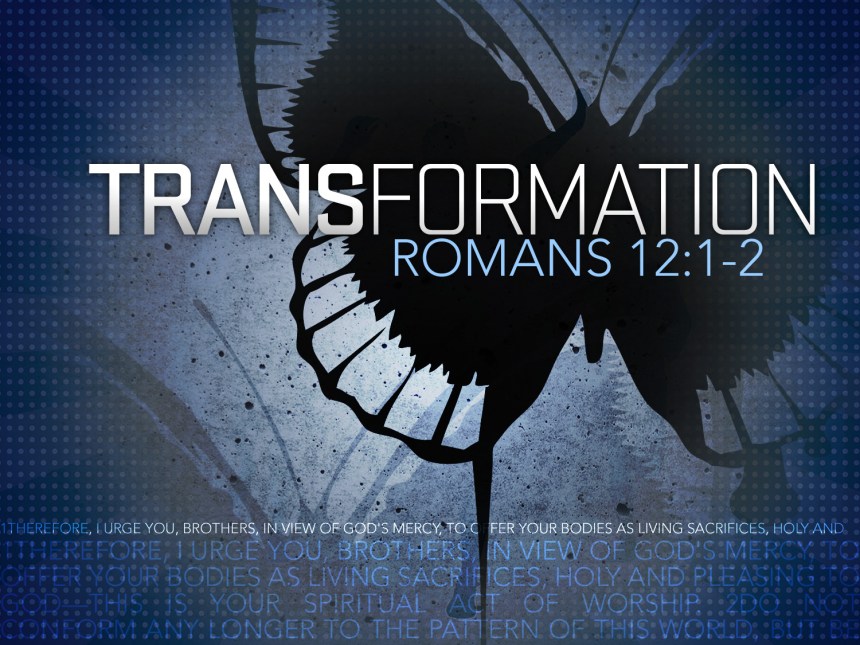
One of the most often repeated ‘proofs’ about the ‘truth’ of Christianity has been the transformative power of Christ, or the way in which accepting Jesus can change our lives for the better. The New Testament mentions this quite a few times, as does the quote in the image above indicate. I’ve had close Christian friends mention this to me, I’ve had preachers speak about this to me, and I fully understand where they are coming from. It makes perfect sense to believe that believing in God should have a positive effect on one’s life, but this claim is a double-edged sword. We need to ask, in what way does Christianity transform a person that no other religion or ideology does?
I’ve met drug addicts, homosexuals, prostitutes who have reformed their lives with and without the use of religion. Yet, the Bible uses as a proof of Christianity’s truth, that accepting Christ transforms a person:
And we all, who with unveiled faces contemplate the Lord’s glory, are being transformed into his image with ever-increasing glory, which comes from the Lord, who is the Spirit. – 2 Corinthians 3:18.
It should stand to reason, that any religion or ideology that is able to transform a person from being in the depths of social and morals ills, to a person of proper moral conduct, would then be considered the truth alongside Christianity. If we’re going to use transformation as a measuring stick, Christianity itself does not fare so well as it offers nothing unique in that regard. The question that needs to be asked is, what is the one way in which accepting Christianity transforms a person that cannot be gained from any other ideology? By that standard, we can throw sexual immorality out of the window, along with alcoholism and drug abuse, as well as criminal and nefarious behaviour. The measuring stick suddenly becomes intangible: accepting Christianity transforms us by giving us peace with God, or by giving us a relationship with God.
However, almost all of the three major Abrahamic faiths claim to offer inner peace. Attaining inner peace is not unique to Christianity. The Qur’an says:
It is He who sent down tranquillity into the hearts of the believers that they would increase in faith along with their [present] faith. And to Allah belong the soldiers of the heavens and the earth, and ever is Allah Knowing and Wise. – Qur’an 48:4.
Thus, the Christian claim of transformation as a proof of Christianity’s truth is not only falsifiable, it is difficult to reconcile with Christianity’s beliefs. Almost all claims to transformation are judged according to the fruits that one produces:
so that you may live a life worthy of the Lord and please him in every way: bearing fruit in every good work, growing in the knowledge of God – Colossians 1:10.
When the term by fruits are used, it generally refers to the good works that one does. This is where the problem begins, Christians judge a person’s acceptance of Christ by a person’s behaviour, you can only judge someone according to the law they obey. Therefore, Christians are ultimately judging someone’s salvation based on whether they obey God’s law or not. If a person was once sexually immoral and today they are not, they consider this a proof of Christ’s transformative powers. If a person was once a drug addict, they once again use this as a proof of Christ’s transformative powers. All of these proofs rests on one’s obedience to the law!
The problem is, Christians claim they don’t have to follow the law to be saved, they are saved through the death of Christ. Yet, almost every metric they use to judge a person’s acceptance of Christ is whether they follow Church rituals (attending Church frequently), or whether they follow Biblical law (don’t steal, don’t murder, don’t perform sexual immoral acts, etc). How Christians avoid this obvious contradiction in thinking, is to claim that one does not have to follow the law of God to be saved, but when a person accepts Christ and are saved, they are inclined to follow the law of God. Such reasoning is futile because as mentioned above, both Christians and non-Christians have been known to make these same changes in their lives without converting to Christianity. Muslims who practise their faith, meet these same criteria, whether it is not partaking in drugs, praying often, giving charity, dressing modestly, or avoiding sexual immorality. If Muslims can achieve this without having a need for the ‘transformative power of Christ’, then of what use is Christianity exactly?
Interestingly, some Christian beliefs claim that a person cannot reform their lives of their own choice (volition). In Calvinism, of their 5 Points, the first is Total Depravity. Calvinist Christians believe the following:
Sin has affected all parts of man. The heart, emotions, will, mind, and body are all affected by sin. We are completely sinful. We are not as sinful as we could be, but we are completely affected by sin.
The doctrine of Total Depravity is derived from scriptures that reveal human character: Man’s heart is evil (Mark 7:21-23) and sick Jer. 17:9). Man is a slave of sin (Rom. 6:20). He does not seek for God (Rom. 3:10-12). He cannot understand spiritual things (1 Cor. 2:14). He is at enmity with God (Eph. 2:15). And, is by nature a child of wrath (Eph. 2:3). The Calvinist asks the question, “In light of the scriptures that declare man’s true nature as being utterly lost and incapable, how is it possible for anyone to choose or desire God?” The answer is, “He cannot. Therefore God must predestine.”
Calvinism also maintains that because of our fallen nature we are born again not by our own will but God’s will (John 1:12-13); God grants that we believe (Phil. 1:29); faith is the work of God (John 6:28-29); God appoints people to believe (Acts 13:48); and God predestines (Eph. 1:1-11; Rom. 8:29; 9:9-23). – Calvinist Corner.
As can be read, Calvinist Christians do not believe that we have the power or means to seek out God, or to reform ourselves. In Islam, God states that we all have the ability to reform ourselves:
Indeed, Allah will not change the condition of a people until they change what is in themselves. – Qur’an 13:11.
Where does this leave us? It leaves us with two distinct understandings about the transformative power of God in a person’s life. In Christianity, while they reject the law as a means of salvation, they use the same law as a means of judging a person’s salvation (fruits). Some sects of Christianity believe that we do not have the power to seek God and to transform our lives. If you’re an alcoholic, you have no hope. If you’re a drug user, you have no hope. You are condemned to suffer because you do not have the inherent ability to want to better yourself. Whereas in Islam, the Qur’an teaches that we all have the ability to transform ourselves, to bring ourselves out of addiction and substance abuse. That we are all born with the fitrah – an innate nature that desires goodness and truth.
Christianity condemns us from the get go, we are totally depraved, born with the original sin, that man is a slave of sin. Whereas in Islam, we aren’t condemned from birth, we aren’t totally depraved, we do not have the original sin, it teaches us that we all have the ability to seek God and to seek the truth, that we can all transform ourselves from a life of sin to a life of good moral behaviour. The difference could not be more stark.
and God knows best.
It’s never good when an insult backfires on you. Case in point, we’ve got avid Sam Shamoun, David Wood and Jonathan McLatchie supporter….Nakdimon (whose real name I have agreed not to use).

and God knows best.
I’ll be publishing a review of this work this week. It is a fascinating and highly scholastic work, written in accessible language that delves deeply into Biblical scholarship and their recent attempts at maligning Islam, most specifically the claims of Craig Evans. I very strongly recommend this work and hope that many Muslims can pick it up as it provides some excellent material to help us respond to missionaries when they try to use ISIS as a means of preaching their hatred against Islam.
However the author didn’t stop there, he proceeded to discuss other prominent topics relevant to Craig Evans including the historical Jesus, the Biblical presentation of Jesus and their relation to the Qur’anic view of Jesus.

The book’s description is as follows:
This is a critical examination of a number of extravagant claims made by the New Testament scholar, Craig A. Evans, and the polemicist, Jeremiah J. Johnston, in their recently co-authored book, “Jesus and the Jihadis: Confronting the Rage of ISIS: The Theology Driving the Ideology.” Unfortunately, the authors direct their own propaganda styled rage upon the religion of Islam itself and the person of Muhammad.
In this book we will see that the authors’ rage towards Islam often compels them to misquote the Quran, even fabricate claims regarding it, unleash many untruths concerning Islamic religious texts, entirely bypass normative Islamic scholarship and distort the history of Islam. They are not the least bit shy to express their utter contempt towards Islam. Examples are provided in this book to substantiate these claims.
The authors are on the same wave length with ISIS. They “use” Islamic texts using ISIS’ non-scholarly methodology. The rich interpretative tradition of Islam simply does not matter.
This book will show that contrary to the claims of the authors, the Islamic religious texts categorically speak against wanton violence and the killing of civilians, so strongly indeed that a major terrorist organisation, much larger than al-Qaeda, the Al-Gama’ah al-Islamiyah , had to renounce violence after a detailed study of Islamic religious texts.
Also discussed are the topics of the historical Jesus research, the divinity of Jesus, source criticism and Biblical and Quranic eschatologies. It is argued that the basic Quranic outline of Jesus comports well with the results of much of historical Jesus research.
The book can be picked up on both the Amazon (US) Store and the Amazon (UK) Store.
and God knows best.

I’m often asked this question by Christians. Do Muslims really love Jesus (peace be upon him)? It’s a question I’ve always found to be odd, but it is popular and asked with good intentions. It’s odd because nothing in Islam portrays Jesus (peace be upon him) in a negative light. The Qur’an says of Jesus:
“And We gave Jesus, the Son of Mary, clear proofs, and We supported him with the Pure Spirit.” – Qur’an 2:253.
Of his birth, it was said to his blessed mother Maryam (may God be pleased with her):
He said, “I am only the messenger of your Lord to give you [news of] a pure boy.” – Qur’an 19:19.
The Qur’an emphasizes his place and role amongst the blessed Messengers of God:
“And [mention, O Muhammad], when We took from the prophets their covenant and from you and from Noah and Abraham and Moses and Jesus, the son of Mary; and We took from them a solemn covenant.” – Qur’an 33:7.
There are six main articles of faith in Islam, of them, one is the belief in the Messengers of God. Thus, it is considered a rejection of faith, disbelief or kufr to reject or deny the Prophethood of Jesus (peace be upon him). As the blessed da’ee Shaykh Deedat has said,”no Muslim can be a Muslim if they reject Jesus.” As is Muslim tradition, we also pray for the Prophets of God by asking that God’s blessings, peace and mercy be upon them all. This is why we always write peace be upon him, after mentioning a Prophet’s name.
In other words, for a Muslim to be Muslim, they must love, accept and believe in Jesus (peace be upon him). However, the love that Muslims have for Jesus (peace be upon him) and the love that Christians have for Jesus (peace be upon him) is two completely different things. It is difficult for Christians to claim that they truly love Jesus (peace be upon him). The way in which Christians profess to love Jesus (peace be upon him) is through his alleged dying and suffering. Muslims cannot and do not rejoice at the suffering of the Prophets. In the Qur’an it says of the attempt to kill Jesus (peace be upon him):
And they (disbelievers) plotted [to kill ‘Iesa (Jesus)], and Allah planned too. And Allah is the Best of the planners. – Qur’an 3:54.
The Qur’an indicates that those who attempted to kill Jesus (peace be upon him) are those who are against God. It is recorded in the New Testament that Jesus (peace be upon him) condemns the Jews for killing Prophets:
“Jerusalem, Jerusalem, you who kill the prophets and stone those sent to you, how often I have longed to gather your children together, as a hen gathers her chicks under her wings, and you were not willing. – Luke 13:34 & Matthew 23:37.
Jesus (peace be upon him) himself proclaims that it is an abhorrent evil that a Prophet should be killed, with many an exegete commenting that this verse indicates God’s ire with the Jews. It can then be understood that the killing or death of a Prophet is not something good. It is something that Jesus (peace be upon him) condemned, something which God expresses His anger against, and so it is difficult to reconcile Christianity’s happiness with Jesus’s (peace be upon him) alleged death, torture and suffering, with loving him. Without delving into soteriological issues, with regard to the Muslim and Christian concepts of Jesus (peace be upon him), it is a clear point of distinction that Muslims do not rejoice at the death, torture and suffering of God’s Prophets, but that Christians praise, enjoy and celebrate such an act of evil.
Muslims love Jesus (peace be upon him) to the point that they want no harm to come upon him, that he does not suffer or is not killed. Yet, Christians love Jesus (peace be upon him) because he needed to die for them, he needed to suffer, he needed to be tortured. This ‘love’ is quite perplexing, the idea of loving someone to the extent you need them to die and that you rejoice at their torture and death is an inscrutable irony. It is something which simply cannot be ignored. It necessarily needs to be viewed as cognitive dissonance. How is it that one can love someone to the point that you wish death upon them? That you wish to see their blood spilled? That you celebrate in masses the blood of Jesus (peace be upon him)? Is this not bloodlust?
In conclusion, Muslims do love Jesus (peace be upon) without wishing death or harm upon him. Christians also love Jesus (peace be upon him) in a different way. They love him to the extent that he needed to be tortured, maimed and killed – the very thing he condemns the disbelieving Jews of doing to previous Prophets. As the artist Meat Loaf once sang, “I’d do anything for love, but I won’t do that!”
and God knows best.
 Calling Christians
You must be logged in to post a comment.