Author Archives: Ijaz Ahmad

Top 10 Muslim vs Christian Debate Clips

Bismillahir Rahmanir Raheem
بِسۡمِ ٱللهِ ٱلرَّحۡمَـٰنِ ٱلرَّحِيمِ ,

Br. Muslim by Choice has released a hilarious 10 clip countdown of the best Muslim vs Christian debates. Some familiar faces include Dr. Shabbir Ali, Br. Sami Zataari and Ustadh Ali Ataie, alongside infamous Islamophobes, James White, Jay Smith and arsonist Anis Shorrosh. Entertaining and educational, it’s quite the video to watch:

wa Allaahu ‘Alam,
and Allaah knows best.

Funding Through 2013 and 2014

Bismillahir Rahmanir Raheem
بِسۡمِ ٱللهِ ٱلرَّحۡمَـٰنِ ٱلرَّحِيمِ ,

Calling Christians, prides itself in being self funded. Our team continues to donate towards expanding and maintaining the website and I am proud to announce that two members of our hard working team, have provided funding through the year until 2013 and until 2014. This means, that Calling Christians will continue to exist and our da’wah will continue to be available for all. It’s almost been one year since our website has existed and we’ve had many gains. Our large database of academic responses to intellectually void Missionaries is ever expanding, and our quality is ever improving.

It’s been a fun experiment, amassing ten’s of thousands of website views, while our reach extends into the US, UK, Canada, most European countries and a significant amount of Asian nations. Surprisingly, most of our website visits come from non-Muslim majority nations, that would mean that Christian majority nations (that is, our target audience) continue to be our greatest source of viewership. Our one year anniversary will coincide with the week of Christmas and plans are already afoot to have special articles, videos and many more surprises for this period.

We’ve accomplished one amazing debate, contributed to several international events and aided in exposing several notable Christian Missionary Scholars, I am proud of our achievements, but I am much more excited for what’s to come. The continued support from the Muslim community, and the continued and sustained dialogue with the Christian community, lends credence to this website’s ability to cross the threshold of interfaith academia. With all this having been said, I look forward to what the next few months bring and God willing, what the next few years holds for us and our work of da’wah.

wa Allaahu ‘Alam,
Br. Ijaz Ahmad.
– Director of CC.

New Covenant, Old Traditions

Bismillahir Rahmanir Raheem
بِسۡمِ ٱللهِ ٱلرَّحۡمَـٰنِ ٱلرَّحِيمِ ,

The crucifixion of Christ is alleged to have herald into commission, the New Covenant [1].  However, if we are to do a basic reading of the New Testament narrative of Christ’s alleged death, we run into some theological conundrums. The unknown authors of the synoptic Gospels were familiar with the Tanach, citing it at every chance they got, yet in doing so they’ve unearthed a vast amount of room for misapplied dogmas and theological errata. Often times, leading to the mess we’re about to uncover. On the cross, Jesus is alleged to have said:

“About three in the afternoon Jesus cried out in a loud voice, “Eli, Eli, lemasabachthani?” (which means “My God, my God, why have you forsaken me?”).[d]” – Matthew 27:46.

Most people see that little citation, that “d” and don’t seem to investigate it. So where does that “d”, lead to?

Matthew 27:46 – Psalm 22:1

Therefore, it is apparent that while Jesus was on the cross, he was referencing this chapter from Psalms. If we go to the chapter in Psalms, most people upon reading would be shocked at the contents within:

My God, my God, why have you forsaken me?
Why are you so far from saving me,
so far from my cries of anguish?
My God, I cry out by day, but you do not answer,
by night, but I find no rest.

According to the reading, God has abandoned Christ on the Cross. This is a far worse depiction of Christ, than any Pharisee could muster. Christ is depicted as abandoned by God, he is suffering and is not being saved by God, hardly a ‘willing sacrifice’ if you were to ask me. Strikingly, even Jesus concedes to the fact that if he was being crucified, that his own “Father”, did not answer his cries for help, this wasn’t for a moment, but lasted day and night. A most strange circumstance, considering that Christ is alleged to have said, “Ask and it will be given to you; seek and you will find; knock and the door will be opened to you.[2]” Unfortunately for Jesus, this was not the case, as God never answered him. If it didn’t work for Christ on the Cross, why do Christians expect anything to be granted to them, save for them believing they are greater than Christ, for if Christ’s sonship could not merit mercy from the “Father”, on what grounds should a lay Christian expect to be given more mercy than the son himself?

Yet you are enthroned as the Holy One;
you are the one Israel praises.
In you our ancestors put their trust;
they trusted and you delivered them.
To you they cried out and were saved;
in you they trusted and were not put to shame.

The diatribe continues by questioning God’s actions, see, God saved the Israelites when they called out to Him, yet when His own alleged Son calls out, there was no answer. Christ is also indicating here, that he was put to shame, yet the Israelites were not, can any Christian answer as to why Jesus was put to suffer and was void of God’s mercy and help?

But I am a worm and not a man,
scorned by everyone, despised by the people.
All who see me mock me;
they hurl insults, shaking their heads.
“He trusts in the Lord,” they say,
“let the Lord rescue him.
Let him deliver him,
since he delights in him.”

Yet you brought me out of the womb;
you made me trust in you, even at my mother’s breast.
10 From birth I was cast on you;
from my mother’s womb you have been my God.

11 Do not be far from me,
for trouble is near
and there is no one to help.

At this point, Christ, in referencing these verses, he no longer considers himself a ‘man’, he considers himself to be less than a man. We’ve all heard of the hypostatic union, half man, half God, well as it turns out, Christ negates being a man and assumes the role of a worm. I guess this is the Hypostatic Union Version 2.0. It’s also telling that Christ says there is no one to help him, this would either mean that Christ who is God, could not help himself or God, the all powerful, failed to help his son.

12 Many bulls surround me;
strong bulls of Bashan encircle me.
13 Roaring lions that tear their prey
open their mouths wide against me.

This is most intriguing, why does Christ reference Psalms 22, when it is in these passages that insults to Gentiles are still considered to be normal? If Christ was dying for their sins, shouldn’t he be dying with the intention of, “Father, forgive them, for they do not know what they are doing.[3]” Yet this is not Jesus’ attitude, it’s quite the opposite, he lowers himself to mocking and insulting, with curses meant for gentiles. In fact, this verse contains some level of anti-Semitism (not too dissimilar to John 8:44-48), Adam Clarke, a famed Christian exegete comments:

The bull is the emblem of brutal strength, that gores and tramples down all before it. Such was Absalom, Ahithophel, and others, who rose up in rebellion against David; and such were the Jewish rulers who conspired against ChristBashan was a district beyond Jordan, very fertile, where they were accustomed to fatten cattle, which became, in consequence of the excellent pasture, the largest, as well as the fattest, in the country. See Calmet. All in whose hands were the chief power and influence became David’s enemies; for Absalom had stolen away the hearts of all Israel. Against Christ, the chiefs both of Jews and Gentiles were united. [4]

Christ therefore, according to Christian theology, in his weakest moment, not only questioned God’s mercy but he fell privy to the sin of insulting and cursing both Gentiles and Jews. This as previously stated, in direct contrast to the earlier statement of, “Father, forgive them, for they do not know what they are doing.”

16 Dogs surround me,
a pack of villains encircles me;
they pierce my hands and my feet.

Lastly, we jump to the last of the insults, using a term that he also used to describe gentiles in Matthew 7, which reads:

Do not give dogs what is sacred; do not throw your pearls to pigs. If you do, they may trample them under their feet, and turn and tear you to pieces.”

Who are these dogs? According to several commentaries, it refers to ‘disbelievers‘, therefore Jews, Muslims, Hindus, Atheists are all considered to be dogs by the Christian God while bringing into commission, the New Covenant. The People’s New Testament Commentary says:

The dog was regarded an unclean animal by the Jewish law. They probably represent snarling, scoffing opposers. The characteristic of dogs is brutality. To try to instill holy things into such low, unclean, and sordid brutal minds is useless. [5]

Therefore infidels (those who are unfaithful) to Christ, are like dogs, because we oppose the religion of Christianity. How strange are these words indeed, especially when Christ was supposed to be dying for our sins. In his supposed ultimate act of mercy and sacrifice, Christ berates, curses and abuses the very people he is allegedly killing himself for.

Conclusion

While Christ was dying for our sins, he references Psalms 22. Upon reading Psalms 22, we discover that it entails a man who is abandoned by God, void of God’s mercy, leading the one in pain to question God’s authority and means of grace. The person suffering then decides to insult, mock and curse those who do not accept his beliefs. If these verses were referenced by Christ as a means of expressing his emotion while on the cross, then the notion that Christ introduced a New Covenant is hogwash, as Christ insults, mocks and curses both Gentiles and Jews. If this is not what Christ intended to communicate with his referencing of the aforementioned passages, why would he allegedly reference them to begin with?

Sources:

  1. Luke 22:20, “In the same way, after the supper he took the cup, saying, “This cup is the new covenant in my blood, which is poured out for you.”.
  2. Matthew 7:7.
  3. Luke 23:34.
  4. Adam Clarke’s Commentary, Psalms 22:12-13.
  5. People’s New Testament Commentary, Matthew 7:6.

Refutation: Is Jesus God because he did mighty miracles?

Bismillahir Rahmanir Raheem
بِسۡمِ ٱللهِ ٱلرَّحۡمَـٰنِ ٱلرَّحِيمِ ,

Question:

Some Christians believe that Jesus’ miracles prove that he is God. The problem with this claim is that almost every single miracle performed by Jesus finds a parallel within the OT. There are many OT prophets that performed the very same kinds of miracles that Jesus did. If the miracles of Jesus make him God then why don’t the miracles of the other prophets prove that they are God/gods as well?

Answer:

Sam’s response is quite muddled, in the sense that while he does attempt to answer the question, he actually falls just short. I understand that this was an honest attempt at responding to the question, but Sam seems unable of directly answer questions. Whether this is due to a lack of faith or a lack of intelligence, I cannot say. but clearly he has lost the plot. He says, and I quote:

 In the first place, it isn’t so much the miracles which make Jesus God, but the divine claims of Jesus which the miracles serve to validate. Jesus made certain statements that no other true prophet before him ever did, and then performed supernatural miracles to back up the truthfulness and validity of those claims:

“‘My sheep hear my voice, and I know them, and they follow me. I GIVE THEM ETERNAL LIFE, and they will never perish, AND NO ONE WILL SNATCH THEM OUT OF MY HAND. My Father, who has given them to me, is greater than all, and no one is able to snatch them out of the Father’s hand. I and the Father are one.’ The Jews picked up stones again to stone him. Jesus answered them, ‘I have shown you many good works from the Father; for which of them are you going to stone me?’ The Jews answered him, ‘It is not for a good work that we are going to stone you but for blasphemy, because you, being a man, make yourself God.’ Jesus answered them, ‘Is it not written in your Law, “I said, you are gods”? If he called them gods to whom the word of God came–and Scripture cannot be broken– do you say of him whom the Father consecrated and sent into the world, “You are blaspheming,” because I said, “I am the Son of God”? If I am not doing the works of my Father, then do not believe me;but if I do them, even though you do not believe me, believe the works, that you may know and understand that the Father is in me and I am in the Father.’ Again they sought to arrest him, but he escaped from their hands.” John 10:25-39

“Jesus said to him, ‘Have I been with you so long, and you still do not know me, Philip? Whoever has seen me has seen the Father. How can you say, “Show us the Father”? Do you not believe that I am in the Father and the Father is in me? The words that I say to you I do not speak on my own authority, but the Father who dwells in me does his works. Believe me that I am in the Father and the Father is in me,or else believe on account of the works themselves.’” John 14:9-11

If I had not done among them the works that no one else did, they would not be guilty of sin, but now they have seen and hated both me and my Father.” John 15:24

“concerning his Son, who was descended from David according to the flesh and was declared to be the Son of God IN POWER according to the Spirit of holiness by his resurrection from the dead, Jesus Christ our Lord,” Romans 1:3-4

Thus, the miracles do not make Jesus God, but rather it is Jesus’ own claims which demonstrate that he at least believed he is God. The miracles only served the purpose of providing divine validation for Christ’s claims.

According to Sam, it’s Jesus’ own words which make him into their God and the miracles Jesus did are simply done to validate Christ’s statements. However, this is a dogmatic answer, it is quite well known that these statements attributed to Christ in the Bible are not first person verbatim (Greek: grapho) statements. Meaning then, that they cannot directly be traced back to Jesus, but can be traced back to someone attributing them to Jesus. If I were to throw this piece of knowledge out of the discussion and assume that Jesus did speak these words, we would still reach at the conclusion that Christ is not a God. For example, using Sam’s quote from John 10 above, we read:

My sheep hear my voice, and I know them, and they follow me. I GIVE THEM ETERNAL LIFE, and they will never perish, AND NO ONE WILL SNATCH THEM OUT OF MY HAND. My Father, who has given them to me, is greater than all, and no one is able to snatch them out of the Father’s hand……I have shown you many good works from the Father;

If we also examine his quote of John 14, we see:

“Jesus said to him, ‘Have I been with you so long, and you still do not know me, Philip? Whoever has seen me has seen the Father. How can you say, “Show us the Father”? Do you not believe that I am in the Father and the Father is in me? The words that I say to you I do not speak on my own authority, but the Father who dwells in me does his works. Believe me that I am in the Father and the Father is in me,or else believe on account of the works themselves.’” John 14:9-11

While Jesus is able to do the miracle, he is claiming that the source of the miracle is not himself, but the Father (God). Jesus is making it clear that the authority who is permitting him to exercise these ‘miracles’ are from the Father (God). Sam’s quote of Romans is irrelevant as these are Paul’s words and not Christ’s. If he cannot prove Christ’s divinity without needing Paul, then clearly he has failed at proving Christ’s divinity, as this would mean that Christ’s words alone are not sufficient in determining his deity. There exists another problem, Sam’s argument can be summarised as such:

  • Christ is God because of what he says.
  • Miracles add validity to his claim of being a deity.

The logic being:

  • If Christ says he is a God.
  • Then miracles add credence to his claim.

Yet, none of Sam’s passages, whether they be Mark 2:5-12, Mark 3:9-11, Matthew 14:22-23, John 6:5-15, 26-42, 47-59, John 11:1-3, 23-27, 38-43 or John 5:2-10, 16-21, 25-26, 28-29, demonstrate that Christ is God, Sam has instead, skipped his initial premise and jumped into the second premise, foregoing his onus of having to prove that Jesus claimed to be a deity. He recognized this by labelling them miracles:

  • Miracles Proving that Jesus Forgives Sins
  • Miracles Proving that Jesus is Sovereign over both the Spiritual and Physical Realms
  • Miracles Proving that Jesus is the Sustainer and the Source of Life
  • Miracles Proving that Jesus is co-equal to the Father

Therefore by Sam’s purposeful ignoring of his own criteria, and because of his own actions, he has intentionally rested his case on miracles and not on Christ claiming to be a deity. This would then mean that because Sam has not proved Christ’s deity through Christ’s own words, then logically, the miracles do not add validity to the claim of Jesus being a deity. Thus rendering Jesus as a miracle worker and not a man-God. If we examine Sam’s ‘miracles‘, what do we see? If we take each of the miracles that Sam has used an example and refer them to Acts 2:22, which reads:

Fellow Israelites, listen to this: Jesus of Nazareth was a man accredited by God to you by miracles, wonders and signs, which God did among you through him, as you yourselves know. – Acts 2:22.

and John 5:30, which reads:

By myself I can do nothing; I judge only as I hear, and my judgment is just, for I seek not to please myself but him who sent me. – John 5:30.

Our resulting conclusion of those miracles should be that:

  • Jesus told someone that there sins were forgiven because the Father forgave the person.
  • Jesus was called the Son of God (a title given to many throughout the OT and NT), and his hand was licked like a dog licking its master’s hand (the word used for worship is  ‘προσκυνέω’ – Strong’s Lexicon, G4352, ‘From G4314 and probably a derivative of G2965 (meaning to kiss, like a dog licking his master’s hand)’.
  • Jesus brings life to those who are spiritually dead, he will ‘resurrect’ their spirituality.
  • The Father has sent Christ to do works in His name.

Practically nothing that Sam has quoted or referenced, lends credence to the claim that Christ is a deity, in fact, what we’ve seen is the direct opposite. Christ constantly indicates that he is doing the work or will of God, by the authority of God. After not proving Christ’s deity and relegating Christ’s miracles as a sign that he is not a God (Note: Sam said that miracles do not make Christ a God, yet Sam constantly tries to demonstrate the miracles which allude to Christ being a God). Sam goes on to say:

No prophet or apostle ever made the claims that the Lord Jesus made, and none of their miracles were done to validate their claims of being Deity.

None of the passages above demonstrate any odd claims that Jesus made. Christ constantly indicates that he is doing the will of the Father (God), in fact, Christ never lays claim to deity, as opposed to his alleged ‘Triune Father’ – YHWH who boasted of it, and made it known to thousands constantly – see my article, “The Christian God: Non Compos Mentis“. Sam continues by saying:

The prophets went out of their to show that they were nothing more than fallible human beings whom God empowered to carry out his specific purpose and will. This is quite unlike the Lord Jesus.

How is this, ‘unlike Jesus‘? Jesus showed that he was weak and feeble, that he had to run and hide, as any other man would, when his life was threatened:

 Believe in the light while you have the light, so that you may become children of light.” When he had finished speaking, Jesus left and hid himself from them. – John 12:36.

Sam, realising that he can’t prove Jesus’ deity through Jesus’ own words, then tried to prove Jesus was God through another alleged miracle, he attempted to do so using Mark 9:38, which reads:

“Teacher,” said John, “we saw someone driving out demons in your name and we told him to stop, because he was not one of us.”

The phrase, ‘in your name’, is rendered as: ‘εν σου ονομα‘, which according to the Greek, also reads, ‘by your authority‘ (see: Strong’s Lexicon, G1722, G4675, G3686). Therefore Sam’s appeal to the text is fanciful at best as the text can be rendered both ways, which is in light of the Gospel’s account of him, which reads:

When Jesus had finished saying these things, the crowds were amazed at his teaching, because he taught as one who had authority, and not as their teachers of the law. – Matthew 7:29.

Therefore, in Mark 9:38, the person was able to drive out demons, by the authority of Christ’s teachings. Similarly, the account in Acts which  Sam has appealed to are once again based on experiences of Paul and not from Jesus, thus directly contradicting his own criteria. If Sam needs more than what Jesus said or did to prove him to be a deity, as opposed to using examples of Christ-only events, then Christ’s own testimony is not sufficient to qualify his claims. Sam then says:

The Quran mentions many of the miracles of the prophets but fails to record a single miracle of Muhammad.

Which is a bit funny, as he then goes on to quote two ayat (verses) from the Qur’an, which says that the Qur’an itself is one of the miracles attributed to Muhammad [saws] (see quote below). That being a direct contradiction of his previous claim:

In fact, many passages of the Quran explicitly deny that Muhammad could perform any sign or wonder. Here are a couple of verses:

But (now), when the Truth has come to them from Ourselves, they say, “Why are not (Signs) sent to him, like those which were sent to Moses?” Do they not then reject (the Signs) which were formerly sent to Moses? They say: “Two kinds of sorcery, each assisting the other!” And they say: “For us, we reject all (such things)!” S. 28:48

Nay; rather it is signs, clear signs in the breasts of those who have been given knowledge; and none denies Our signs but the evildoers. They say, ‘Why have signs not been sent down upon him from his Lord?’ Say: ‘The signs are only with God, and I am only a plain warner. What, is it not SUFFICIENT FOR THEM that We have sent down upon thee the Book that is recited to them? Surely in that is a mercy, and a reminder to a people who believe. S. 29:49-51 A.J. Arberry

It should be noted that none of the ayat say that Muhammad [saws] could not perform any sign or wonder. I know that Sam can be desperate at times, but to quote something and then directly lie about what he has just quoted either demonstrates abject dishonesty or really horrible comprehension abilities. He continues his eisegesis of the Qur’an by saying:

The last passage expressly states that the Quran is sufficient as a sign, which means that no other sign or miracle was necessary. Thus, this surah poses huge problems for Muslims since if Muhammad did perform miracles then this means that the Quran is not sufficient, thereby falsifying the claims of the Quran!

In a previous response to Sam, I dubbed the term, “Shamounian Logic”, and it’s mostly certainly showed up again. The Qur’an clearly says that the Qur’an is a sufficient miracle for those who have knowledge and understanding, it does not say that it is the only miracle that is necessary, or that other miracles would be more sufficient, or that there would be no other miracles. In Sam’s reasoning, although the Qur’an says it is sufficient, if more miracles were done, this somehow makes the Qur’an less sufficient. His reasoning is not clear, the Qur’an does not say that nothing else is a sufficient miracle or that there would be no more miracles, but what it does say, is that by itself, the Qur’an is a sufficient miracle, if there are other miracles that are sufficient for other persons, that does not negate the appropriateness or sufficiency of the Qur’an. I’ll give an example of Sam’s reasoning using Paul and “the sufficiency of Christ’s Grace“. In 2 Corinthians 12 we read:

Therefore, in order to keep me from becoming conceited, I was given a thorn in my flesh, a messenger of Satan, to torment me.  Three times I pleaded with the Lord to take it away from me. But he said to me, “My grace is sufficient for you, for my power is made perfect in weakness.” – 2 Corinthians 12:7-9.

Even though Christ’s grace was supposed to be sufficient enough for Paul to deal with the messenger of Satan tormenting him, Paul still begged and pleaded for the ‘thorn in his flesh’ to be removed. This thorn was never removed, does this mean that Christ’s grace was not sufficient? According to Sam’s reading, the answer is “Yes”. Sam then admits that while there are miracles that the Prophet Muhammad [saws] did do, that these are recorded in ahadith and they are therefore ‘all made up or false‘, an appeal to ignorance really. Sam does not understand Ulum al Hadith, of which is the basis for the modern science of Textual Criticism. Hadiths were not written later or hundreds of years after the Prophet [saws], but during and directly after his lifetime, see the following excerpt from this article by Brother Jibreel (a former Christian convert to Islam):

2. The Muslim Methodology of Preserving Information

The Jewish and Christian Scriptures suffered at the hands of the very people who should have guarded them. Because of this, the Muslim community felt a pressing need to safeguard the knowledge that was entrusted to them. To write a book using a false name is tremendously easy; in the literary world the use of pen names is commonplace. Similarly, it is possible to tamper with someone else’s work then republish it under the original author’s name…Muslims devised a working solution long ago, developing a watertight system which they employed faithfully for eight or nine centuries.[4] Starting from the time of prophet Muhammad (peace be upon him) him receiving the firs revelation, knowledge proliferation has been at the core of the Muslim nation. Upon reaching Madinah the prophet (peace be upon him) arranged schools and ordered scribes to write whatever he dictated. Many companions had copies of his letters dispatched to different people.[5] Not only those things were written down with the outmost care, but also at the same time information was being checked for reliability and content. From the affairs of the government during the reigns of the three caliphs to the administrative lessons, religious rulings, political and military strategies and all of the prophet’s traditions were passed on through a very strict system.[6] The Muslims methodology of gathering information, verifying it and passing it on had no match. The isnad systems that were developed to make sure that each incident or rapport is reported by an unbroken chain back to the original narrator[7]. Evidence for the transmission of knowledge in this manner comes from thousands of ahadith bearing identical wordings but coming from different corners of the Islamic world, each tracing its origin back to a common source – the Prophet, a Companion, or a Successor.[8] For example the hadith of Abu Huraira about the obligation of following the Imam is recorded at least 124 times, and reported by 26 third-generation authorities that unanimously trace its origin to Companions of the Prophet (peace be upon him).[9] However theisnad system was only the first step in establishing authenticity and preserving information. Establishing trustworthiness (morality, ability, memory etc.) of the narrator was another important step in the Muslim methodology of preserving information. Umar Al Khatab and Abu Bakr, when collecting the Quran in one book, they followed the instructions of Allah the Almighty:

“…and take for witness two persons from among you, endued with justice.”[10]

The people of ahlul suffah (companions of the rows) used to dedicate their whole lives just to record and propagate the teachings of Islam during the time of prophet Muhammad (peace be upon him). Many companions such as Uthman, Ali, Umar and others memorized not only the sayings of prophet Muhammad (peace be upon him) but also the whole Quran. The knowledge they preserved was passed on in the forms of books through a very stringent system that involved different levels of information delivery such as Sama’ (teacher reading to student), Ardh(student reading to teacher), Munawala (hading someone a text and allowing transmission), Kitaba (a form of correspondence), and Wasiyya (entrusting someone with knowledge to be delivered). These are just a few examples of the strict methods taken by Muslims to preserve information and the early stage in which such began being implemented[11]. Now we turn our attention to the proofs of the documentation of the Sunnah of prophet Muhammad (peace be upon him) during his time.

3. Documentation of the Sunnah during the Prophet’s (peace be upon him) time

It is agreed upon that the Sunnah of prophet Muhammad (peace be upon him) was not fully recorded in written form during his life time, however as we have pointed out the Muslim methodology was not restricted to writing, and it relied heavily on memorization. However much of the ahadtih have been recorded in writing and books during the lifetime of the prophet (peace be upon him). There are many evidences showing that companions (in this case Abu Shah) used to write the speeches of prophet Muhammad such as the example of the speech of the inviolability of Makkah.[12] The prophet (peace be upon him) also wrote letters to many kings inviting them to Islam, some of them still being available today. Some critics have raised an objection by quoting the hadith of Abu Sa’eed al-Khudri, who narrates that prophet Muhammad said:

“Do not take down anything from me, and he who took down anything from me except the Qur’an, he should efface that…”[13]

They claim that prophet Muhammad (peace be upon him) did not allow hadith to be recorded, however they selectively take what suits their agenda and ignore the whole corpus of ahadith. It is clear from the wording of prophet Muhammad that such a statement was general and it was during the time when the writing of the Quran was in it’s early stages. The prophet allowed and encouraged his companions to write ahadith once the system for recording Quran was in place. He did not want companions to mix the Quran with ahadith, and indeed we see today that such genius paid off. When some companions heard that Amr ibn Al As’s had scrolls of ahadith, they reproached him, however he went and told the prophet who said:

“Write from me, for by the One Who has my soul in His hand, nothing other than the truth has ever come out of my mouth”.[14]

The same Abdullah ibn Amr ibn Al As’s collected the book called Al-Sahefah As-Sadiqah. This is a book that contained many ahdith of the prophet Muhammad (peace be upon him) and was spread amongst the companions and later generations. The Sahefah of Abu Hurayrah, which was proliferated by his student Hammam ibn Munabbih, that has survived till today and was published by Dr. Hamidullah.[15] It is without a doubt that there is sufficient information in the history of Islam to show that the Sunnah of prophet Muhammad (peace be upon him) was recorded and passed on with his permission and during his lifetime. Those who say that the Sunnah was recorded only centuries after prophet Muhammad during the time of Bukhari and Muslim are far away from the historical proofs that are widely available, wishing only to escape the strict security measures that were divinely implemented in guarding not only the Quran and the Sunnah, but also Islam as a way of life.

4. Documentation of the Sunnah after the Death of Prophet Muhammad (peace be upon him)

After the death of Muhammad (peace be upon him), his companions took an even stricter approach in preserving and reporting the Sunnah. In this period, a number of leading companions wrote down narrations and preserved them. Abu Hurayrah to whom 5374 channels of hadith are attributed, had many books in his possession as reported by Hasan ibn Amr ad-Damari.[16] Abdullah ibn Abbas to whom 1600 channels of narrations are attributed used to write whatever he heard and used to hire his servants to write ahadith for him.[17] Abdullah ibn Amr ibn Al Aas to whom 700 channels of narration are attributed recorded ahadith in his Sahefah, while Abu Bakr was also amongst those who used to possess written copies of the Sunnah of prophet Muhammad (peace be upon him).[18] After the companions of prophet Muhammad (peace be upon him), their students passed on the knowledge to their students. Abu Hurairah had nine students writing down from him, Ibn Umar had eight, Anas had sixteen, Aisha had three, ibn Abbas had nine, Jabir had fourteen, and others did the same as well.[19] The time in history is known as the era of the Tabi’oon and in this era the science of gathering ahadith became stricter, as people began inventing ahadith. It is very important to highlight here the fact that fabrication was discovered and dealt with. This shows the strict nature of the system and the strong filters it had for innovations and lies. Under the reign of Umar ibn Abdul Azeez[20] the scholars compiled books of ahadith containing biographical data on the various narrators of ahadith, exposing the liars and fabricators.[21] The hadith proliferation spread with such a great strength and precise science that the science began influencing the other branches of Islamic knowledge such as Aqeedah, Fiq and other. The people would not accept the authority of any teacher of any subject, unless he or she would possess the unbroken link till prophet Muhammad (peace be upon him) coupled with the reliability criteria for that person in question. The collection of ahadith and knowledge was so intense and serious that some would not wait for the ahadith to reach them but they would travel for long periods of time to hear and verify ahadith. Jabir ibn Abdullah heard of a hadith and traveled on a mount that he had purchased, and after one moth of travel he gathered the hadith and returned back. The same happened to Abu Ayoob al Ansari.[22] The sciences have only intensified and crystallized as time advanced and following the ear of the companions, the followers and their followers came the ear of the Saheehs, which was the pinnacle of hadith sciences[23].

The following excerpt is from “The Compilation of Hadith, by Shaykh Abdul Ghafar Rahmanee“, wherein he mentions the earliest codices of ahadith, dating from the time of the Prophet [saws], to directly after his death, not several hundred years later as Sam has dishonestly stated:

The Written Works of the First Period

1. Saaheefa Saadiqaa
This has been attributed to Abdullaah Ibn Amr al-Aas (d.63H at the age of 77). He had a great love for writing and making notes and whatever he heard from the Prophet Muhammad (sal-Allaahu ‘alayhe wa sallam), he would write down. He personally had permission from the Messenger of Allaah (sal-Allaahu ‘alayhe wa sallam).5 This treatise is composed of about 1000 ahaadeeth. It remained secure and preserved
within his family for a long time. All of it can be found in the Musnad of Imaam Ahmad (rahimahullaah).

2. Saaheefa Saheehaa
This is attributed to Humaam Ibn Munabbeh (rahimahullaah) (d.101H). He was from the famous students of Abu Hurairah (radi-Allaahu ‘anhu); he wrote all the ahaadeeth from his teacher. Copies of this manuscript are available from libraries in Berlin (Germany) and Damascus (Syria); Imaam Ahmad Ibn Hanbal (rahimahullaah) has categorised all of this Saaheefa in his Musnad, under Abu Hurairah (radi-Allaahu ‘anhu).6 This treatise, after considerable effort by Dr. Hameedullaah, has been printed and distributed from Hyderabad (Deccan). It contains 138 narrations. This Saaheefa is a part of the ahaadeeth narrated from Abu Hurairah, most of its narration’s are in Bukhaaree and Muslim; the words of the ahaadeeth are extremely similar and there are no major differences between them.

3. Saaheefa Basheer Ibn Naheek
He was the student of Abu Hurairah (radi-Allaahu ‘anhu). He also gathered and wrote a treatise of ahaadeeth which he read to Abu Hurairah (radi-Allaahu ‘anhu), before they departed, and he verified it.7

4. Musnad Abu Hurairah (radi-Allaahu ‘anhu)
It was written during the time of the Companions. Its copy was with the father of Umar Ibn Abdul Azeez (radi-Allaahu ‘anhu), Abdul Azeez Ibn Marwaan, the Governor of Misr who died in 86H. He wrote to Katheer Ibn Murrah instructing him to write down all the hadeeth he heard from the Companions and to send them to him. Along with this command, he told him not to send the ahaadeeth of Abu Hurairah as
he already had them.8 And the Musnad of Abu Hurairah (radi-Allaahu ‘anhu) was hand-written by Ibn
Taymiyyah (rahimahullaah). It is available in a library in Germany. 9

5. Saaheefa Alee (radi-Allaahu ‘anhu)
We find from Imaam Bukhaaree’s checking that this collection was quite voluminous and it had in it issues of zakah, and from the actions that were permissible or  impermissible in Madeenah, the Khutbatul-Hajjah al-Widah and Islaamic guidelines.10

6. The Final Sermon of the Messenger of Allaah (sal-Allaahu ‘alayhe wa sallam)
On the conquest of Makkah the Messenger of Allaah (sal-Allaahu ‘alayhe wa sallam) told Abu Shah Yamanee (radi-Allaahu ‘anhu) to write down the final sermon. 11

7. Saaheefa Jaabir (radi-Allaahu ‘anhu)
His students, Wahb Ibn Munabbeh (d.110H) and Sulaymaan Ibn Qais Lashkaree, collected the narrations of Jaabir (radi-Allaahu ‘anhu). In it they wrote down issues of Hajj and the Khutbatul-Hajjah al-Widah.12

8. Narrations of Aa’ishah Siddeeqa (radi-Allaahu ‘anhaa)
The narrations of Aa’ishah Siddeeqa were written by her student, Urwah Ibn Zubair.13

9. Ahaadeeth of Ibn Abbaas (radi-Allaahu ‘anhu)
There were many compilations of the ahaadeeth of Ibn Abbaas (radi-Allaahu ‘anhu). Sa’eed Ibn Jubair would compile his ahaadeeth.14
10. The Saaheefa of Anas Ibn Maalik (radi-Allaahu ‘anhu) Sa’eed Ibn Hilaal narrates that Anas Ibn Maalik (radi-Allaahu ‘anhu) would mention
everything he had written by memory; whilst showing us he would say: “I heard this narration from the Messenger of Allaah (sal-Allaahu alayhe wa sallam) myself and I would write it down and repeat it to the Messenger of Allaah (sal-Allaahu ‘alayhe wa sallam) so that he would
affirm it.” 15

11. Amr Ibn Hazm (radi-Allaahu ‘anhu)
When he was made the Governor and sent to Yemen he was given written instructions and guidance. Not only did he protect the guidelines but he also added 21 commands of the Messenger of Allaah (sal-Allaahu ‘alayhe wa sallam) and he made it into the
form of a book.16

12. Risaalah of Samurah Ibn Jundub (radi-Allaahu ‘anhu)
This was given to his son in the form of a will; this was a great treasure.17

13. Sa’ad Ibn Ubaadah (radi-Allaahu ‘anhu)
He knew how to read and write from the time of Jahiliyyah.

14. Maktoob Naaf’i (radi-Allaahu ‘anhu)
Sulaymaan Ibn Moosaa narrates that Abdullaah Ibn Umar (radi-Allaahu ‘anhu) would dictate and Naaf’i would write.18

Citations and Sources:

5 See Mukhtasar Jaami Bayaan al-Ilm (pp. 36-37).
6 For further details see Saaheefa Humaam of Dr. Hameedullaah and Musnad Ahmad (2/312-318).
7 See Jaami al-Bayaan (1/72) and Tahdheeb at-Tahdheeb (1/470)
8 See Saaheefa Humaam (p.50) and Tabaqaat Ibn Sa’ad (7/157)
9 Muqqadimah Tuhfatul-Ahwadhee Sharh Jaami Tirmidhee (p.165)
10 Saheeh al-Bukhaaree, Kitaab al-Ei’tisaam bil-Kitaab was Sunnah (1/451)
11 Saheeh al-Bukhaaree (1/20), Mukhtasar Jaami Bayaan al-Ilm (p. 36) and Saheeh Muslim (1/439)

12 Tahdheeb at-Tahdheeb (4/215)
13 Tahdheeb at-Tahdheeb (7/183)
14 ad-Daarimee (p. 68)
15 Saaheefa Ibn Humaam (p. 34) from Khateeb al-Baghdaadee and al-Haakim (3/574)
16 al-Wathaiq as-Siyaasah (p.105), Tabaree (p.104)
17 Tahdheeb at-Tahdheeb (4/236)
18 Ad-Daarimee (p.69) and Saaheefa Ibn Humaam (p.45) from Tabaqaat Ibn Sa’ad

You can see more of the Prophet’s [saws] miracles here and here:

Ergo, Sam Shamoun has been duly debunked, his incompetence demonstrated and his dishonesty made public. He has thus far, failed to answer the question, abused his own logic, and lied against common ahadith knowledge. His attempts to deceive and pervert basic historical information have been shown to be infantile, and I must conclude that Sam’s arguments have been thoroughly reduced to nothing more than an ignorant’s rants.

wa Allaahu ‘Alam,
and Allaah knows best.

Refutation: More proof that Allah worships like his creatures do

Bismillahir Rahmanir Raheem
بِسۡمِ ٱللهِ ٱلرَّحۡمَـٰنِ ٱلرَّحِيمِ ,

This article is a response to Sam Shamoun’s, “More proof that Allah worships like his creatures do“. I’m not familiar with Sam Shamoun’s personal behaviour outside of what he says about Muslims via his website, blog posts and TV shows, but something stood out in this article of his which really caught my attention. I’ve been insulted and mocked by Sam, fatwa’d by Sam, even threatened by his friends, and that’s okay. I understand that Ministering to Muslims is difficult and he’s human, so I expect him to lose patience once in a while. I’ll excuse him for those mistakes, but Sam reached a new level of superiority complex by referring to Muslims as ‘creatures’. This is not okay, this is a product of his years of anti-Islamic behaviour, that he now considers non-Christians to be ‘creatures’. As a Muslim, I am genuinely worried that Sam’s behaviour is mimicking those terrorists who in the the recent past (think: Anders Behring Breivik), who through years of anti-Muslim behaviour finally ‘snapped’ and committed mass murder. I leave Sam with some Bible passages, in the hope that he corrects his behaviour before he follows the path of his Lord (see: Luke 19:27, John 8:44-48):

 As for a fool, on that very day he makes his anger known, but he who ignores an insult is prudent. – Proverbs 12:16.

“Listen to Me, you who know righteousness, You people in whose heart is My law: Do not fear the reproach of men, Nor be afraid of their insults. – Isaiah 51:7.

Now, on to the article at hand, Sam’s declares his goal to be to:

In this article we are going to provide further proof that Allah not only worships similarly to the way his so-called righteous followers do so, but that he actually worships himself.

If we follow Sam’s rationale, then Sam must do the following:

  • Where Allah does Sujood.
  • Where Allah does Taubah (repentance).
  • Where Allah fasts.
  • Where Allah does Hajj or pay Zakaat.

This is because this is how we, as Muslims, worship Allaah ta ‘ala (God – the Exalted). However, not for one moment does Sam do this in his article, therefore although Sam declares the above as his intent, he fails to follow through on his promise. Instead, he commits some eisegesis of Qur’anic ayat, back peddles a bit, throws some insults, quotes a few of his previous articles and combines it into this article. Can’t say I expected any better, but this article seems more of an afterthought, than anything else. If you’ve read it, you’d realise how disjointed his points are, how disconnected the evidences are and most importantly, how absurd his reasoning is. Sam begins his rabid diatribe by explaining to us Muslims, something we already know, that Allaah’s word…..is Allaah’s word. The Qur’an is Allaah’s word, not the word of Muhammad [saws], or of any poet or inspired author, but the direct word of God. Sam continues by saying:

As such, Islamic orthodoxy teaches that it is the Muslim deity who is speaking the Quran, and therefore means that the one who is communicating all throughout the Islamic scripture is Allah himself.

It is important to understand that the Qur’an, literally means, “The Recitation”, therefore the Qur’an is meant to be recited, or in other words, the Qur’an is Allaah’s word which we are commanded to recite, as is seen in this ayah (the very first revealed ayah):

Recite thou in the name of thy Lord Who has created everything – Qur’an 96:1.

Or of these other ayat:

  • Read, and your Lord is the most gracious – Qur’an 96:3.
  • When thou dost read the Qur’an, seek Allah’s protection from Satan the Rejected one. – Qur’an 16:98.
  • When the Qur’an is read, listen to it with attention, and hold your peace: that ye may receive Mercy. – Qur’an 7:204.
  • Establish prayer at the decline of the sun [from its meridian] until the darkness of the night and [also] the Qur’an of dawn. Indeed, the recitation of dawn is ever witnessed. – Qur’an 17:78.
  • And is it not sufficient for them that We revealed to you the Book which is recited to them? Indeed in that is a mercy and reminder for a people who believe. – Qur’an 29:51.

Allaah also mentions the punishment of those who failed to take heed of recitation of the Qur’an:

My revelations were recited unto you, but ye used to turn back on your heels – Qur’an 23:66.

Therefore, Allaah revealed the Qur’an to us, for us to recite it (or read it) for guidance and direction. In this way, Allaah has given us something to praise and glorify Him with. Similarly, the Jews also have an ‘aliyah’ (recitation) of the Torah to praise and glorify God:

In all Jewish communities, it is considered a great merit and honor to be called to recite the blessings at the Torah. It is referred to as an aliyah,which means “ascent,” referring not just to the climb to the platform upon which the Torah is read, but also to the spiritual elevation which comes along with this opportunity. [1]

The reading of the Torah out loud, is a recitation for the congregation to hear the words of the Lord:

Traditionally, two people are not called up for the same aliyah. Jewish law requires that congregants hear every word of the Torah reading distinctly, which is difficult if two persons chant the portion simultaneously. This ruling was extended to prohibit two people from being called up to the Torah together, even if only to recite the blessings, since worshipers unable to hear the words clearly would not be permitted to respond “amen.” [2]

Therefore, both Muslims and Jews recite their ‘scripture’ or the “Word of their Lord”, as an act of reverence to God. With this having been understood, we now reach Sam’s main argument:

It needs to be stressed that these are not commands issued to others, ordering them to say these words. Rather, these statements are supposed to come directly from the mouth of Allah, so to speak.

What!? I am compelled to use this GIF to express my current emotions:

We clearly saw above in the following Qur’anic references where Muslims are commanded to recite the Qur’an or portions of the Qur’an:

  1. Qur’an 96:1.
  2. Qur’an 96:3.
  3. Qur’an 16:98.
  4. Qur’an 7:204.
  5. Qur’an 17:78.
  6. Qur’an 29:51.
  7. Qur’an 35:29.
  8. Qur’an 46:29.
  9. Qur’an 2:44.
  10. Qur’an 17:107
  11. Qur’an 15:1.
  12. Qur’an 26:69.
  13. Qur’an 84:21.
  14. Qur’an 87:6.
  15. Qur’an 23:105.
  16. Qur’an 68:15.
  17. Qur’an 73:4 which reads: “and recite the Qur’an in slow, measured rhythmic tones.”

Therefore, Sam’s argument has fallen flat on his own face, his rationale depends on the understanding that Allaah did not command us to recite the Qur’an, however through proof by contradiction, Sam’s argument has been nullified. Sam continues his fallacious reasoning by quoting Surah Fatihah and saying:

Not only is Allah praising and worshiping himself here, he even invokes himself to guide himself on the straight path in order to avoid becoming the object of his own wrath and judgment!

Sam seems to be ignoring the fact that the Qur’an is Allaah’s word, which He wants us to recite, therefore by reciting Surah Fatihah, we are praising and glorifying our Lord. Let me give another example of Sam’s inconsistency, if we were to apply his methodology to the Bible, we reach the case that it is wrong for God to praise Himself, yet, in his own scripture we read:

 After this, the word of theLORD came to Abram in a vision: “Do not be afraid, Abram. I am your shield, your very great reward. ” – Genesis 15:1.

When Abram was ninety-nine years old, theLORD appeared to him and said, “I am God Almighty ; walk before me faithfully and be blameless. – Genesis 17:1.

I am the LORD your God; consecrate yourselves and be holy, because I am holy. Do not make yourselves unclean by any creature that moves along the ground. – Leviticus 11:44.

I am the LORD, who brought you up out of Egypt to be your God; therefore be holy, because I am holy. – Leviticus 11:45.

Then all mankind will know that I, the LORD, am your Savior, your Redeemer, the Mighty One of Jacob.” – Isaiah 49:26.

You shall not bow down to them or worship them; for I, the LORD your God, am a jealous God, punishing the children for the sin of the parents to the third and fourth generation of those who hate me, – Exodus 20:5.

According to Sam’s reasoning, if God praises himself (as is demonstrated above) then this is not a true God, therefore Sam has either implicitly declared his hate for YHWH, or has explicitly declared his disdain with YHWH, either way, Sam’s argument demonizes YHWH and that’s quite remarkable. If it is that God praising Himself is wrong, then why does Sam’s God do it as well? In fact, Sam argues the following:

These statements pretty much show that Allah is a very needful deity, one that desperately needs to be loved, praised and adored, which is precisely why he created mankind and genies in the first place:

And I have not created the jinn and men except to worship me. 51:56

Which is ironic, since YHWH commands that He too, be praised and worshipped:

Then say to Pharaoh, ‘This is what the Lord says: Israel is my firstborn son, and I told you, “Let my son go, so he may worship me.” But you refused to let him go; so I will kill your firstborn son.’” – Exodus 4:22-23.

Then say to him, ‘The Lord, the God of the Hebrews, has sent me to say to you: Let my people go, so that they may worship me in the wilderness. But until now you have not listened. – Exodus 7:16.

Then the Lord said to Moses, “Go to Pharaoh and say to him, ‘This is what the Lord says: Let my people go, so that they may worship me. – Exodus 8:1.

Not only is Sam’s argument insulting to his own God, Sam is condemning his Bible and Jesus himself. I say this because if we believed as Sam believed (Jesus is a God), then Jesus who is a God, came to earth to worship Himself:

Going a little farther, he fell with his face to the ground and prayed, “My Father, if it is possible, may this cup be taken from me. Yet not as I will, but as you will.” – Matthew 26:39.

In fact, if we follow with Sam’s reasoning, God came to earth to command people to worship Him, isn’t that vain and desperate, Sam?

Jesus said to him, “Away from me, Satan! For it is written: ‘Worship the Lord your God, and serve him only.’” – Matthew 4:10.

Therefore let’s analyse all of  Sam’s arguments thus far:

  • The Qur’an does not say that it is to be recited. Debunked!
  • God commands himself to be praised and worshipped only in the Qur’an. Debunked!
  • God cannot praise Himself. Debunked!

Conclusion:

Sam’s arguments contradict Biblical teachings, demonizes YHWH, is self contradictory and he has shown abject dishonesty. This is what I personally refer to as, “Shamounian Logic“, I should probably trademark it, but then again, I don’t think it is possible to trademark human incompetence and inanity.

wa Allaahu ‘Alam,
and God knows best.

For further articles debunking, exposing Sam Shamoun, see here.

Similar Topics:

All Non-Christian Prison Chaplains Fired from Canadian Prisons

Bismillahir Rahmanir Raheem
بِسۡمِ ٱللهِ ٱلرَّحۡمَـٰنِ ٱلرَّحِيمِ ,

Persecution of non-Christians residing in Christian majority nations has reached a high point this week. Once more, we have to fight for our rights that Christians themselves enjoy. Yet, it’s not Muslims being discriminated, we’re also being joined by every other non-Christian faith! As it turns out, in Canadian prisons, all non-Christian Chaplains are being fired from their positions of counselling prisoners. It should be noted that a significant majority of Canada’s prison population is majority Christian, here are the percentages from CBC Canada:

There are nearly 15,000 inmates in federal custody and a large majority of them identify themselves as Christian:


  • 37.5% are Catholic.
  • 19.5% are Protestant.
  • 4.5% are Muslim.
  • 4% First Nations spirituality
  • 2% are Buddhist.
  • less than 1% are Jewish.
  • less than 1% are Sikh.

The article goes on to mention just how discriminatory the move is:

Figures obtained by CBC News show that before the contract cancellations — which will take effect by the end of March 2013 — there were about 80 full-time chaplains across the country and all but one are Christian. There are about 100 part-time chaplains, 20 of them non-Christian. The total cost of the chaplain program is about $6.4 million a year and it’s not clear what amount will be saved by the cancellations.

This is most likely a move to convert non-Christians to Christianity, there can be no other motive. When you have men who stare at 4 walls all day long and live day to day not knowing if another inmate can murder them, it’s significantly depressing. These men are emotionally and mentally fragile, perfect fruit for Christian Chaplain-Missionaries to, ‘spread the message’ of their human-worship centric faith.

We hope that God allows the non-Christian prisoners to be guided through their own faiths and that they are not forced into having Christianity shoved down their throats, as many of us have experienced this in the past (myself included). Please see this CBC News link for a video interview and comments by Rabbis and Imams from Canada on this depressing issue.

wa Allaahu Alam,
and Allaah knows best.

The Bible Command Christians to Obey Islamic Governance

Bismillahir Rahmanir Raheem
بِسۡمِ ٱللهِ ٱلرَّحۡمَـٰنِ ٱلرَّحِيمِ ,

Often times we hear Christians (see: Pamela Geller, David Wood, Sam Shamoun, Christians on FFI, Answering Islam, Answering Muslims), who align themselves with political groups claiming that the, “Shari’a” is immoral, backward, barbaric, archaic and ‘harmful to society’. Yet, if we were to ask them to define what Shari’a is, they wouldn’t seem to know. Some may point you to a Fiqh manual titled, “Reliance of the Traveller“, or quote for you some ahadith (plural of Hadith) or Qur’anic ayah as evidence of, “the creeping Shari’a“. However, they don’t know what the Shari’a actually is. The Shari’a is a body of law, which is both interpersonal and intrapersonal. It is sourced from the Qur’an, the Sunnah (Ahadith, Seerah), Ijma (consensus of scholars based on Qur’an and Sunnah) and Qiyas (analytic deduction). Therefore, as it is, there is no one ‘fiqh’ manual that embodies the Shari’a as a whole for Muslims. Fiqh can be defined as Islamic jurisprudence. What does this mean?

Shari’a is not:

  • Based on one man’s opinion.
  • Based on one scholar’s opinion.
  • Based on one fiqh manual.
  • Based on crowd justice (there are courts to try criminals!).
  • Based on a few Ahadith.
  • Based on a few Qur’anic verses.
  • Based on a few men’s opinions.

Shari’a depends on a vast consensus of scholars who hold positions verified and validated through noted certification by institutions of high academic standards (see: Umm al Qura University, the University of Madina, Al Azhar, Dar al Ulum, etc). A single mufti’s (Molvi, Maulana, Shaykh, Sheikh, Ustadh, Sidi, etc) legal ruling (fatwa) is not binding because it is one man’s legal opinion, unless it is verified through Qur’an, Sunnah and Ijma (previously defined above).

Intrapersonal Shari’ah:

This involves the personal beliefs and actions of an individual, this can involve performing Salaah, eating halaal, dressing appropriately, using appropriate language etc). In other words, it’s your personal moral standing that is dependent upon you and the Shari’a intends that you do good actions and not sin.

Interpersonal Shari’ah:

This involves the dealings and interactions of one person with another person, group of persons, his community and his legal obligations to the state. Usually this involves providing food for one’s family, obeying traffic laws, not stealing from others, not injuring or causing undue harm to anyone, paying taxes etc. In this form of Shari’a, this is what Islamophobes usually refer to as the creeping Shari’a. Nowhere in the Shari’a is one allowed to take justice into their own hands, we often hear of public whippings, beheadings, honour killings etc. However nowhere in the Shari’a are Muslims or non-Muslims for that matter, allowed to take justice into their own hands, in fact we have courts that are governed by Judges (a judge is a Qadhi), where matters are dealt with. One popular misconception is the rulings concerning rape and the punishment of the victim in Islam, I have previously written on this topic here.

The Bible Commands the Following of the Islamic Shari’a:

This might surprise many Christians, but the Bible actually commands its adherents to obey Islamic law. If you’ve read Macbeth or almost any Shakespearean play, you’d have come across the ‘Divine Right of Rulership’, wherein it is believed that rulers are destined by God to rule and therefore to rebel against a monarch would mean rebelling against God. Protestant England and Shakespeare did not invent this belief, it’s actually based on one of Paul’s Epistles:

Let everyone be subject to the governing authorities, for there is no authority except that which God has established. The authorities that exist have been established by God. Consequently, whoever rebels against the authority is rebelling against what God has instituted, and those who do so will bring judgment on themselves. For rulers hold no terror for those who do right, but for those who do wrong. Do you want to be free from fear of the one in authority? Then do what is right and you will be commended. For the one in authority is God’s servant for your good. But if you do wrong, be afraid, for rulers do not bear the sword for no reason. They are God’s servants, agents of wrath to bring punishment on the wrongdoer. Therefore, it is necessary to submit to the authorities, not only because of possible punishment but also as a matter of conscience.

This is also why you pay taxes, for the authorities are God’s servants, who give their full time to governing.  Give to everyone what you owe them: If you owe taxes, pay taxes; if revenue, then revenue; if respect, then respect; if honor, then honor. – Bible : Romans (13): 1 – 7.

If I could have put that entire passage in bold, I would have. Clearly it is saying that the one in power, the governing authorities are instituted by God. Your God. What does this mean? Well, quite simply, if you are a Christian living in Muslim lands and their are Islamic laws, you must obey them. That’s right, this means living under Shari’a is condoned by Jehova, YHWH, Yeshua, Jesus, or whatever you call him. It doesn’t get much better for Tea Party followers in the United States, as opposing your President is tantamount to opposing God, similarly campaigning against Muslim politicians or liberties allowed by the law for Muslims, means you’re practically incurring God’s wrath upon yourselves.

Some might dismiss this understanding of the aforementioned passage by claiming that I’m a Muslim, therefore I am twisting ‘scripture’, therefore in response to this claim, let’s examine Christian Exegete, Adam Clarke’s commentary on the verses:

This is a very strong saying, and most solemnly introduced; and we must consider the apostle as speaking, not from his own private judgment, or teaching a doctrine of present expediency, but declaring the mind of God on a subject of the utmost importance to the peace of the world; a doctrine which does not exclusively belong to any class of people, order of the community, or official situations, but toevery soul; and, on the principles which the apostle lays down, to every soul in all possible varieties of situation, and on all occasions. And what is this solemn doctrine? It is this: Let every soul be subject to the higher powers. Let every man be obedient to the civil government under which the providence of God has cast his lot. 

As God is the origin of power, and the supreme Governor of the universe, he delegates authority to whomsoever he will; and though in many cases the governor himself may not be of God, yet civil government is of him; for without this there could be no society, no security, no private property; all would be confusion and anarchy, and the habitable world would soon be depopulated. In ancient times, God, in an especial manner, on many occasions appointed the individual who was to govern; and he accordingly governed by a Divine right, as in the case of Moses, Joshua, the Hebrew judges, and several of the Israelitish kings. In after times, and to the present day, he does that by a general superintending providence which he did before by especial designation. In all nations of the earth there is what may be called a constitution-a plan by which a particular country or state is governed; and this constitution is less or more calculated to promote the interests of the community.

The civil governor, whether he be elective or hereditary, agrees to govern according to that constitution. Thus we may consider that there is a compact and consent between the governor and the governed, and in such a case, the potentate may be considered as coming to the supreme authority in the direct way of God’s providence; and as civil government is of God, who is the fountain of law, order, and regularity, the civil governor, who administers the laws of a state according to its constitution, is the minister of God. But it has been asked: If the ruler be an immoral or profligate man, does he not prove himself thereby to be unworthy of his high office, and should he not be deposed? I answer, No: if he rule according to the constitution, nothing can justify rebellion against his authority. He may be irregular in his own private life; he may be an immoral man, and disgrace himself by an improper conduct: but if he rule according to the law; if he make no attempt to change the constitution, nor break the compact between him and the people; there is, therefore, no legal ground of opposition to his civil authority, and every act against him is not only rebellion in the worst sense of the word, but is unlawful and absolutely sinful. – Adam Clarke’s Commentary, Romans 13:1-2.

Conclusion:

Therefore, in closing, I conclude that those who fear Islamic Shari’a do not have a holistic and educated teaching of what it actually is, that they are playing on emotional fears for their own gain, whether monetary or otherwise (see: Argumentum ad Baculum). Following the Shari’a is no different to following a constitution of any nation where you reside according to Pauline doctrine, whom according to the Christian’s own belief is taught/ inspired by God Himself. Political Christians who are opponents of Shari’a simply do not understand it and are going against Biblical teachings.

wa Allaahu Alam,
and Allaah knows best.

Atheist Attacks Hamza Tzortzis and Nabeel Alkhalidy Responds

Bismillahir Rahmanir Raheem
بِسۡمِ ٱللهِ ٱلرَّحۡمَـٰنِ ٱلرَّحِيمِ ,

Sarf (Arabic morphology) is completely different from using a lexicon to get the base meaning of a tri-root Arabic word. This is where pseudo-intellectualism manifests itself among faux scholarship. Arabic is not like English, there is no equivalent to Arabic Sarf in the English language, therefore interpreting an arabic word, by relegating it to mere dictionary definition, removes the very understanding of the language itself. In other words, Br. Nabeel exposes an Atheist’s ignorance of Arabic very beautifully:

wa Allaahu ‘Alam,
and Allaah knows best.

Debate: James White vs Sami Zataari, “Was Christ Crucified?” – Video

Bismillahir Rahmanir Raheem
بِسۡمِ ٱللهِ ٱلرَّحۡمَـٰنِ ٱلرَّحِيمِ ,

MDI has finally released their video of Sami’s debate with James. For a quick review, if you’ve ever heard James speak, then expect nothing new from him. Sami responded well, kept up with James, easily nullified James’ arguments and ran rings around the Alpha and Omega Ministry man:

wa Allaahu Alam,
and Allaah knows best.

US Soldiers Still Use Rifles with Bible Passages

Bismillahir Rahmanir Raheem
بِسۡمِ ٱللهِ ٱلرَّحۡمَـٰنِ ٱلرَّحِيمِ ,


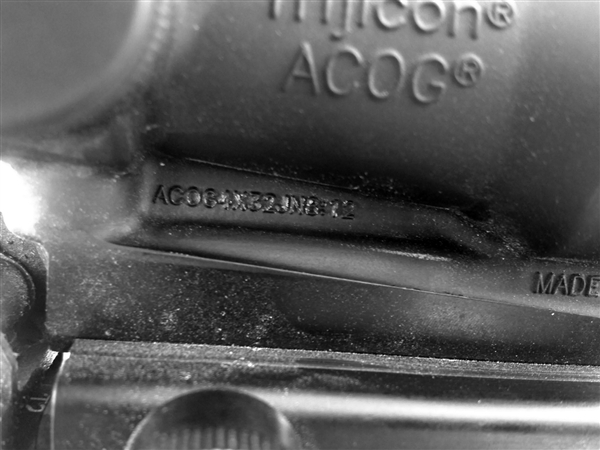
Rifles manufactured for US soldiers stationed in Afghanistan were found to contain references to Bible passages in 2010. Shortly thereafter, when the engravings were discovered, public outrage caused the US Department of Defense to have the engravings removed from the weapons. Some 2 years later and soldiers are still being deployed to Afghanistan with Bible passages clearly cited on their rifles. MSNBC reports:

When the so-called “Jesus rifle” came to light in Jan. 2010, it sparked constitutional and security concerns, and a maelstrom of media coverage. The Pentagon ordered the removal of the secret code referring to Bible passages that the manufacturer had inscribed on the scopes of the standard issue rifles carried by U.S. soldiers into battle in Iraq and Afghanistan. Nearly three years later — despite the military’s assertion that is making “good progress” — the code remains on many rifles deploying to Afghanistan, which some soldiers argue is endangering their lives by reinforcing suspicions that the United States is waging a crusade against Muslims.

The rifle sights are also engraved with other Biblical citations by the Michigan based, Crusade minded weapons manufacturer:

The code stamped into the metal of the soldier’s ACOG (Advanced Combat Optical Gunsight) ends with the model number with “JN8:12.” which refers to the New Testament passage, John 8:12, which reads: “Then spake Jesus again unto them, saying, I am the light of the world: he that followeth me shall not walk in darkness, but shall have the light of life.”

Other rifle scopes among some 250,000 provided by Michigan-based manufacturer Trijicon were imprinted with codes that point to passages in Matthew, Mark, Luke, Corinthians and Revelations, ABC News reported when it broke the news in 2010. Trijicon, reportedly had been following this practice for at least two decades, and it was well known to gun enthusiasts.

Are Christians truly waging a ‘crusade’ – Christian Holy War, against Muslims? That’s a question for you to answer, however, these Bible passages on weapons do not detract from such a notion.

wa Allaahu Alam,
and Allaah knows best.

« Older Entries Recent Entries »